

ABUNDA DISCOVERIES UGANDA • GORILLA SAFARI GUIDE
Is It Possible to Go Gorilla Trekking in Uganda for 2 Days?
2-day gorilla trekking Uganda is possible, especially when the journey starts in Kigali, Rwanda. This practical guide explains the route, the forest day, the permit-first booking sequence, the hidden risks of a tight return flight, and how to choose a short safari that works in real life.
Request a 2-Day Gorilla Safari QuoteView the 2-Day Kigali Safari
The short answer: yes, but two days have to be designed carefully
2-day gorilla trekking Uganda is a realistic travel plan when you start from Kigali, travel to the appropriate part of Bwindi on the first day, sleep near your confirmed trekking briefing point, and dedicate the second morning to the forest encounter. This is not the same as promising that every traveler can land at any airport and complete a gorilla trek within forty-eight hours. Your departure city, passport arrangements, the particular trekking sector on your permit, and your onward travel plans determine whether the schedule works.
A useful way to judge a short safari is to count the fixed commitments rather than the attractions. The gorilla permit fixes the trekking date and sector. The park briefing fixes the morning you must be present. A border crossing adds an international procedure. The forest walk has an unpredictable finishing time. Your return transfer must fit around all of these commitments, not the other way around. A good two-day trip protects the gorilla encounter from a timetable that is too tight.
For someone already staying in Kigali, this can be a memorable weekend-sized expedition. For someone arriving in Entebbe on the first afternoon, the same promise may be impractical without air transport and an extra night. The honest answer is therefore yes, with conditions. The best operator is not the one promising the fastest possible arrival, but the one explaining which parts of the itinerary can be controlled and which cannot.
Why Kigali changes the arithmetic of a Uganda gorilla safari
Travelers often search for a Uganda safari and automatically imagine a departure from Entebbe or Kampala. That assumption makes a two-day gorilla experience appear impossible. Yet geography tells a different story: Rwanda’s capital is a practical gateway to parts of southwestern Uganda. A road transfer from Kigali can connect with the border and continue toward accommodation serving the southern Bwindi trekking sectors. Actual driving time depends on the crossing used, the permit sector, the road and weather conditions, and the length of immigration formalities.
The important advantage is not simply that the road looks shorter on a map. It is that the journey can be separated into a full transfer day and a forest day. You arrive at your lodge before the trekking morning, sleep, eat breakfast, and leave for the briefing without a long overnight drive. After the gorilla encounter, you travel back toward Kigali with your guide. This sequence is demanding, but understandable and operationally coherent.
The border remains a real international crossing, not a scenic checkpoint that can be ignored. Travelers should verify Rwanda and Uganda entry conditions for their nationality, including whether they need an appropriate visa or permission to re-enter Rwanda. A short itinerary is especially sensitive to missing documents, because there is little spare time to resolve an issue. The best route is the one that matches the permit and the traveler’s paperwork, not necessarily the route with the shortest advertised mileage.

Map: Kigali to Bwindi Impenetrable National Park
The map shows the broad route region, not a guaranteed border crossing or exact drive time. Your final route depends on the confirmed trekking sector.
Why two days from Entebbe is a different proposition
Entebbe International Airport is an excellent starting point for a longer Uganda safari, but it is far from Bwindi by road. Reaching the park generally involves a substantial cross-country journey before the trekking day begins. Reversing that journey immediately after trekking can turn a short holiday into an exhausting series of transfers. Even when a road schedule appears technically possible, the plan may leave little room for traffic, rain, fatigue or an unexpectedly long forest walk.
Some travelers ask whether a domestic flight can solve the problem. Flights serving airstrips in southwestern Uganda may reduce portions of the journey, but they do not place visitors directly at a gorilla family’s location. Road transfers between an airstrip, a lodge and the appropriate briefing point remain necessary. Flight schedules, luggage rules, availability and weather-related changes must also be considered. A two-day air-assisted plan should only be described as possible after the exact flight and permit arrangements have been checked.
If your holiday starts in Entebbe, the more comfortable recommendation is usually to add time. A three- or four-day gorilla itinerary can protect a full day for travel, one for trekking and another for the return, while creating space for rest. Choosing an extra day is not failing to travel efficiently. It may be the decision that allows you to enjoy the rainforest rather than spend the entire journey watching the clock.
Day one: make the transfer day work for the trekking day
Your first day should begin with an agreed pickup in Kigali, ideally after a restful night in the city. Meet the safari driver-guide, confirm the passport and permit arrangements, and review the expected route. The journey then leads out of the city through Rwanda’s countryside toward the selected border crossing. The landscape may be beautiful, but the purpose of this day is clear: reach the correct lodge for tomorrow’s trekking sector in good time.
At the border, every traveler must follow the current immigration procedures. Passport checks, entry permissions and other formalities are individual responsibilities even when a guide helps explain the process. Once in Uganda, the road continues through southwestern highlands and local communities. The approach can include winding roads and variable surfaces. Do not build the itinerary around a fixed arrival hour that leaves no allowance for delays.
When you reach the lodge, check which briefing point you will use and what time your guide plans to collect you. Prepare boots, rainwear, long trousers, a small daypack, drinking water and any personal medication. Ask whether breakfast can be served early and whether the lodge can prepare a packed meal if appropriate. An unhurried evening is useful: it gives you time to absorb the setting, charge your camera and sleep before a physically active morning. Day one succeeds when tomorrow begins without confusion.
Day two: the gorilla encounter and the return journey
On the second morning, eat breakfast early and travel to the designated park briefing location. Rangers explain how the trek is organized, what to do when gorillas are encountered, and why visitor health rules matter. You may be placed with other permitted visitors under the supervision of the park team. A private safari vehicle does not mean the park will assign a private gorilla trekking group.
Once the forest walk begins, the schedule becomes less predictable. The animals are free-ranging and move as they feed and rest. Trackers and rangers coordinate the search, but nobody can promise an exact walking distance or a guaranteed finish time. The route may involve muddy ground, roots, dense vegetation and steep slopes. Some visitors reach the gorillas relatively quickly; others spend considerably longer hiking. The time in the forest is part of the experience, not an inconvenient delay to be rushed.
For standard trekking, visitors normally have up to one hour observing a located gorilla family, following current park rules and ranger instructions. Afterward, the group walks back and reconnects with the vehicle. Only then can the return journey toward Kigali properly begin. This is why an international flight booked for the same evening can be risky. A responsible plan leaves generous flexibility, or recommends an additional Kigali night if a flight connection is important.
The permit-first rule that prevents expensive mistakes
The gorilla permit is not an accessory added after the rest of the holiday is booked. It is the central reservation around which a short safari must be built. A permit applies to a particular trekking date and operating arrangements, and availability can be limited. Before paying for nonrefundable accommodation or flights, establish whether a suitable permit can be secured for your travel dates and which Bwindi sector it serves.
This order matters because Bwindi is not one entrance beside a single cluster of lodges. Its principal trekking areas are Buhoma, Ruhija, Rushaga and Nkuringo. A property advertised as being near Bwindi might be close to the forest boundary but inconveniently far from the briefing point printed on your arrangements. That mistake can create a long early-morning drive, exactly when the itinerary needs to be most dependable.
A practical booking sequence is straightforward: confirm the travelers and date, identify a workable sector, check the permit, match a lodge to that sector, and only then finalize the road route. Ask for written confirmation of what has actually been reserved. A quotation is not the same as a confirmed permit. If your preferred date is unavailable, consider an adjacent date or a longer itinerary rather than forcing a poor route around the last available lodge.
Buhoma, Ruhija, Rushaga and Nkuringo: the four-sector decision
The four Bwindi trekking sectors sit around different parts of a rugged forest landscape. Buhoma is associated with the northern approach, Ruhija with the eastern highlands, Rushaga with the southern area and Nkuringo with the southwestern ridges. Each has its own practical road approach and accommodation choices. A sector should never be selected on the assumption that the easiest-sounding name guarantees an easy trek; gorilla movements and weather remain unpredictable.
For a short Kigali-based journey, southern sectors are often considered because of their relationship to the southwestern Uganda approach. That does not mean every southern permit is equally convenient, or that northern sectors are impossible. The exact drive, road surface, lodge location and border choice must be assessed together. An itinerary that looks efficient on a national map may become awkward when the final local roads are considered.
Ask the operator to name your intended sector, the lodge serving it and the approximate transfer plan. Also ask whether the quoted accommodation is contingent on permit confirmation. Avoid comparing lodges only by star rating or photographs: the most luxurious room can be a poor choice if reaching the briefing point requires a stressful predawn transfer. For a two-day safari, proximity and dependable logistics are valuable forms of comfort.
Map: Bwindi National Park and Its Trekking Sectors
Use this location map for orientation only. Buhoma, Ruhija, Rushaga and Nkuringo have different road approaches and briefing points.
How to compare two-day packages without being misled by the price
Two safari quotations may carry the same label yet describe very different services. One may include the gorilla permit, a private driver-guide, accommodation, meals and all border transfers. Another may list a lower headline price while excluding the permit or charging separately for meals, airport pickup or a different vehicle category. Comparing totals without comparing inclusions creates false bargains.
Request a written breakdown of the permit, transport, fuel, guiding, accommodation, meals, drinking water and any applicable taxes or activity fees. Check whether the accommodation is a single room, twin room or shared arrangement. Ask what happens if one traveler cancels, if a permit cannot be secured, or if a border delay changes the arrival time. A clear quotation also distinguishes the safari company’s cancellation policy from the wildlife authority’s permit conditions.
For solo travelers, private transport can account for a substantial share of the price because one guest covers the vehicle and guide. Two people sharing may reduce the per-person land cost, while the individual gorilla permit remains a separate per-person expense. Group travel can sometimes lower costs, but only if an actual compatible departure exists. A cheap promise of a shared tour that has not formed should not be treated as a confirmed option.

Understanding permit rates without publishing a misleading number
Gorilla permit prices are regulated and can vary by visitor category and tariff period. A rate that applied to an earlier season should not automatically be advertised as the rate for your travel date. This is particularly important for guests planning 2027 journeys or booking across a change in official tariffs. Check the Uganda Wildlife Authority’s current published guidance or obtain an updated written quotation before committing money.
The permit normally covers the regulated gorilla trekking activity under park supervision, not the entire safari holiday. It does not replace the need to arrange accommodation, a vehicle, border documentation or optional personal services. A porter, for example, may be useful for carrying a daypack but should not be silently assumed to be included unless the quotation says so.
When an operator quotes a complete package, ask for the final currency, whether the permit has been included, what exchange-rate assumptions apply, and whether the price changes if the number of travelers changes. For families, also verify the official minimum trekking age before paying. A transparent price is one that you can understand, not simply the smallest number in a search result.
The border-crossing checklist for a short safari
Crossing from Rwanda into Uganda is an essential part of many two-day itineraries. Requirements depend on nationality, residency status, visa category and current government rules. The safari guide can explain the planned crossing, but travelers must hold valid passports and appropriate permissions for every country they will enter or re-enter. A return to Kigali may require attention to Rwanda re-entry conditions as well as Uganda entry requirements.
Before travel, verify the official immigration information rather than relying on a social-media comment or an old blog post. Check the validity of your passport, any visa or travel authorization, and any applicable health-entry requirements. If traveling with a minor, ask whether additional documents are necessary. Keep copies of important confirmations accessible without depending entirely on mobile data at the border.
Do not treat the border as a guaranteed five-minute stop. Even an ordinary day can involve queues, document checks and unexpected delays. The practical response is to depart at a sensible time, avoid unnecessary detours on day one, and reserve time for the formalities. An efficient safari does not require rushing immigration officers; it requires building realistic allowances into the itinerary.
How much walking should you expect in Bwindi?
The most common misunderstanding about gorilla trekking is that purchasing a permit also purchases a predictable walking distance. It does not. Rangers work with information about gorilla movements, but the animals remain wild and can shift position overnight. A trek may be shorter than expected or become a demanding walk through steep, slippery forest. Visitors should arrive ready for uncertainty rather than expecting a neatly timed nature trail.
The terrain itself deserves respect. Rainforest slopes can be uneven, and roots or wet leaves can make footing difficult. Even a relatively short route may feel strenuous at altitude or after a long travel day. Comfortable, broken-in hiking boots, long trousers and rain protection are more useful than stylish travel clothes. A small pack with water and essential medication allows you to keep your hands free when necessary.
If you have concerns about mobility or stamina, raise them before the permit is purchased. Discuss realistic options with the operator and relevant medical professionals where appropriate. You can also ask about porter availability and any assistance the park may arrange. No responsible operator should guarantee that a particular gorilla family will be easy to reach, but good communication can help identify a more suitable overall plan.
What the hour with mountain gorillas actually feels like
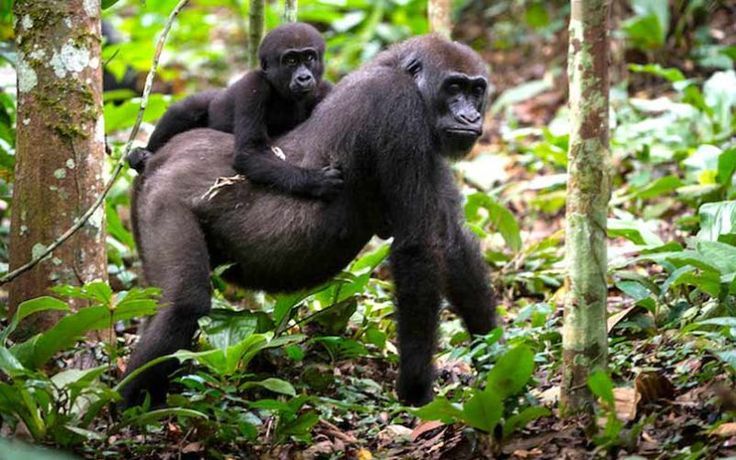
The encounter is often described in dramatic terms, but its strongest moments may be quiet. You might watch a young gorilla investigate leaves, an adult rest under the canopy, or family members move together through the vegetation. Their behavior belongs to them; it is not a performance arranged for visitors. Some days offer lively interaction, while others involve long stretches of feeding or resting.
A ranger directs the group on where to stand, how to move and when to take photographs. Keep your voice low, avoid sudden movements and follow the required separation distance. Do not attempt to attract attention, touch an animal or step away from the group for a better camera angle. Flash photography is not permitted. If a gorilla approaches, the ranger’s instructions take priority over the desire to capture an image.
The permitted viewing period for standard trekking is generally up to one hour after the group is located. That time can feel brief after a long journey, which is one reason preparation matters. Arrive with charged batteries, a camera you know how to use and realistic expectations. Rather than trying to record every second, allow yourself a few moments to observe without a screen between you and the forest.
Health precautions are part of protecting the gorillas
Mountain gorillas can be vulnerable to diseases carried by people. This makes health guidance a conservation issue rather than a minor visitor formality. If you develop symptoms of illness before your trek, inform the safari operator and park personnel promptly. They can advise on the applicable procedures. Do not conceal symptoms simply because the trip has taken considerable time and money to arrange.
During the briefing, pay attention to the park’s current requirements concerning distance, hygiene and behavior around the gorillas. Rules may be updated as conservation knowledge and health circumstances change. Follow the ranger even when the instruction interrupts a photograph or requires the group to move away from a seemingly ideal viewpoint. Protecting the animals is more important than extending an encounter by a few seconds.
Responsible trekking also means avoiding litter, staying with the authorized group and respecting the surrounding forest. The ecosystem includes many other species and supports nearby communities. A short safari can still be a meaningful contribution to regulated conservation tourism when visitors respect the rules and choose operators who explain them clearly.
The one-night lodge decision: choose the right place, not the prettiest photograph
Accommodation is a surprisingly important part of a two-day itinerary. On a longer safari, an inconvenient lodge may be an annoyance. On a short trip, it can jeopardize the next morning’s schedule. A lodge should be selected after the trekking sector is known, with attention to actual road access to the briefing point rather than vague claims of being near the national park.
Ask how early breakfast can be served, whether the guide can collect guests from the property, and what happens if arrival is later than expected. Confirm whether dinner is included and whether drinking water is supplied. If the property sits on a steep or rough access road, check that the assigned safari vehicle can reach it reliably in wet conditions. These questions may sound unromantic, but they are precisely what makes a short holiday run smoothly.
Budget, midrange and luxury accommodation can all work if they are appropriately located. A traveler who values a scenic balcony may accept a slightly longer transfer, while another may prefer the shortest practical drive to the park gate. The point is to make that tradeoff consciously. For a two-day gorilla safari, a restful night close to the correct departure point is itself a premium service.
Photography planning when your schedule is short
Bwindi’s forest light can change rapidly. Sunlight may be filtered through thick canopy, while rain and mist create dim conditions even during the day. A camera or phone that performs well in lower light is helpful, but no equipment guarantees a clear photograph. Gorillas may be partly hidden by foliage, and visitors cannot reposition themselves freely because ranger instructions determine safe viewing positions.
Before leaving Kigali, charge batteries, clear storage space and place equipment in a rain-resistant bag. If carrying a large camera, consider whether its weight will be comfortable during an uncertain hike. A lightweight setup you can use confidently may be more practical than an elaborate kit that slows you down. Bring a lens cloth and avoid changing lenses unnecessarily in wet conditions.
Most importantly, separate photography from the purpose of the trip. It is possible to return with only a few photographs and still have had an extraordinary encounter. Spend some of the viewing time noticing the forest sounds, the gorillas’ relationships and the patience required to observe wild animals respectfully. Those details may become the memories you value long after the images are stored.
What to pack for exactly one night and one forest morning
A two-day trip does not need a large suitcase, but it does need purposeful packing. For the transfer, choose comfortable travel clothing and keep your passport and essential documents readily accessible. For the forest, prepare long trousers, a long-sleeved top, sturdy hiking boots, socks, a waterproof outer layer and a small daypack. Gardening-style gloves can be useful when steadying yourself near vegetation, subject to park guidance.
Carry enough drinking water for the trek, any prescribed medication, and suitable snacks if allowed by the park team. A waterproof cover or dry bag protects your phone, camera and important papers. In the evening, lay out your trekking clothes and check that the camera is charged. A headlamp or small flashlight can be useful at a lodge, but you do not need to turn a one-night safari into a mountaineering expedition.
Avoid carrying valuables you will not use. Leave unnecessary luggage secured according to your travel arrangements, and ask the operator about baggage space if sharing a vehicle. Your goal is to begin the trek comfortable, organized and able to move safely. A short packing list that addresses real forest conditions is better than an impressive list of items that never leave the suitcase.

Best time of year for a two-day Uganda gorilla safari
Gorilla trekking is generally conducted throughout the year, subject to park operations and permit availability. Some months are often considered relatively drier, including parts of June through September and December through February, but Bwindi is a mountain rainforest and rain can occur in any season. Travelers should not treat the word dry as a guarantee of clear skies or firm paths.
Wetter periods can mean muddy trails, slower road travel and greater demand on waterproof equipment. They can also bring atmospheric forest scenery and a different travel rhythm. For a short itinerary, the operational question is whether the road, lodge and permit arrangements are sound for the chosen dates. Flexibility in arrival and departure times can be more valuable than choosing a month based on an average weather chart alone.
If you have a fixed weekend, check permit availability before making other nonrefundable bookings. If you have several possible dates, compare the availability of permits and suitable sector-based accommodation together. A beautifully timed international flight is not helpful if the only remaining gorilla permit requires an impractical road journey. Book the experience first and build the travel plan around it.
Who benefits most from a two-day gorilla trekking holiday?
The two-day format suits travelers who already have a base in Kigali and want to devote a short window to one major wildlife experience. It can work for business travelers adding a weekend, couples extending a Rwanda holiday, and visitors who prefer a single focused encounter rather than a long list of parks. It may also appeal to returning East Africa travelers who have already visited the region’s other attractions.
It is less attractive for someone who dislikes long road transfers, wants extensive photography time in several habitats, or needs a predictable finish on day two. Travelers with mobility concerns should be especially cautious about compressing the trip. A forest trek followed by a substantial return drive can be tiring even for active people. Families must also check the official minimum age for gorilla trekking and consider appropriate alternatives for anyone not eligible to participate.
The best decision is personal rather than promotional. If the journey fits your energy, documents, travel window and budget, two days may be exactly right. If it requires skipping rest, gambling on a flight connection or pretending that road conditions cannot change, add another night. A successful safari is one that matches the traveler, not one that merely fits a headline.
Solo travelers: why the vehicle matters to your final cost
A solo traveler can arrange a two-day gorilla safari, but the cost structure deserves attention. The permit is purchased for the individual, while the driver-guide, vehicle and fuel are often fixed land costs. When one person uses a private vehicle, those costs are not shared. This can make the per-person quotation higher than the figure advertised for two guests traveling together.
Ask whether the company has a genuinely confirmed shared departure that matches your dates and trekking sector. Do not assume that a group will appear later simply because the website mentions group travel. If sharing is possible, check the group size, room arrangement and how the return schedule is managed. A group with conflicting onward flights may not be a good fit for a short trip.
Private travel also has advantages. You can agree on a sensible pickup time, choose suitable rest stops and avoid coordinating several travelers’ luggage and preferences. The gorilla trek itself remains managed by park personnel, however, so a private road safari should not be confused with exclusive access to a gorilla family. Compare the total value of each arrangement rather than using the per-person price as the only measure.
Couples and friends: planning around two different energy levels
Traveling as a couple or with a friend can make a short safari more economical and enjoyable, but people do not always have the same tolerance for long drives or steep forest walking. Discuss those differences before booking. One traveler may be eager for an ambitious trek, while another may be anxious about slippery slopes or altitude. The operator needs to know about relevant concerns early enough to advise realistically.
On day one, avoid filling every available hour with optional sightseeing. The main purpose is to reach the lodge ready for the next morning. A relaxed dinner, an early bedtime and a clear briefing may be more valuable than squeezing in an additional stop. On day two, both travelers should accept that the trekking pace and ranger instructions are shared responsibilities within the park group.
If one person is unable or unwilling to trek, the itinerary should identify what they will do while the other is in the forest. That might mean relaxing at the lodge or arranging a separate suitable activity where available. Do not assume that someone without a gorilla permit can simply accompany the trekking group. A thoughtful plan respects both travelers’ interests without compromising park rules.
Why the return flight deserves its own decision
A common question is whether travelers can trek gorillas in the morning and fly out of Kigali that evening. The answer depends on a collection of variables that cannot be fully controlled: when the trek finishes, how long it takes to walk back, road conditions, border formalities and the airline’s check-in deadline. Even a flight that appears late enough on paper may leave little margin if the forest day runs long.
Rather than promise a particular arrival hour, ask the operator for a conservative assessment of your exact flight. Consider the consequences of missing it, including replacement tickets, accommodation and onward connections. Those costs can far exceed the price of an extra night in Kigali. When the stakes are high, the safest itinerary may be two days for the gorilla safari followed by a separate departure day.
If your flight is fixed and cannot be changed, share its details before the permit is booked. A responsible operator may advise against a two-day plan for that schedule. This is useful advice, not a lack of enthusiasm. Protecting the traveler’s international journey is part of delivering a good safari.
A decision table: two days versus three or four days
Two days are best understood as a focused encounter with limited recovery time. The first day is mainly a transfer, and the second contains both trekking and the return journey. Three days create room to separate the forest morning from the return drive, which can be more comfortable after a demanding hike. Four days may allow an additional activity or a more relaxed pace, depending on the route and the traveler’s arrival airport.
The shortest itinerary is not automatically the cheapest once missed connections, rushed transfers or unnecessary vehicle mileage are considered. Likewise, a longer itinerary is not automatically better if the traveler has only a brief window in Rwanda. The relevant question is how much useful experience and rest each day provides. Compare the number of nights near the park, the amount of driving after trekking and the certainty of onward travel.
For a traveler who has never visited East Africa, a three-day plan may offer a gentler introduction. For a Kigali resident with a clear weekend and a confirmed permit, two days can be efficient. For a visitor arriving through Entebbe and hoping to see other wildlife, four days or more will often make better sense. Use the schedule that respects geography rather than the schedule that looks most impressive in an advertisement.
| Option | Best starting point | What to expect |
|---|---|---|
| 2 days | Kigali | Transfer day, trekking morning, same-day return drive |
| 3 days | Kigali or a carefully planned Uganda route | More recovery time and a separate return day |
| 4 days or more | Kigali or Entebbe | Greater flexibility for road travel and extra experiences |
Can you replace the second day with a gorilla habituation experience?
Standard gorilla trekking and the gorilla habituation experience are different activities with different permit arrangements and viewing rules. A traveler should not assume that purchasing one permit allows participation in the other. Habituation experiences, where offered, can involve different time commitments and may be less compatible with an immediate same-day transfer back to Kigali.
If you are interested in habituation, tell the operator before discussing a two-day itinerary. Ask which sectors currently offer the activity, what the official permit requirements are, and how much time should be reserved after the forest walk. The itinerary may need an additional night to avoid an unrealistic return schedule. A longer wildlife encounter is not useful if the day ends in a hurried race toward the border.
For most first-time visitors who have only two days, standard gorilla trekking is the simpler planning framework. It already offers a regulated opportunity to observe wild mountain gorillas in their forest habitat. Choosing it does not make the experience lesser; it simply matches the activity to the time available. A good safari is defined by sound preparation and respect for the animals, not by the longest possible list of activities.
Can you include golden monkeys, a lake visit or a city tour?
A short safari sometimes appears online with several additional attractions attached. It is worth asking whether those activities are genuinely included or merely mentioned as possibilities. Golden monkey tracking, lake excursions and city tours require their own travel time, arrangements and, in some cases, separate permits. Trying to add them to a two-day gorilla trip may turn the schedule into a sequence of hurried stops.
If you want a Kigali city experience, consider scheduling it before the safari begins or after you return, provided your wider holiday allows time. If Lake Bunyonyi is a priority, an additional night in southwestern Uganda may make the visit more rewarding. If you hope to see golden monkeys, discuss a longer itinerary that gives that activity its own suitable morning rather than squeezing it into the gorilla trekking day.
The value of a focused two-day itinerary lies in leaving the central encounter enough room to happen naturally. A photograph beside a lake taken during a rushed transfer is not necessarily more satisfying than an unhurried breakfast after a night in the mountains. Choose additions for their actual experience, not simply because they increase the number of items in a package title.

How to evaluate an operator before paying
A trustworthy quotation should tell you where the trip begins, where it ends, which permit and sector are being arranged, and what services are included. It should explain the accommodation category and provide a realistic description of the road transfers. The company should be willing to discuss cancellation conditions and the difference between a proposed itinerary and a confirmed reservation.
Look for specificity rather than extravagant promises. Claims of guaranteed easy trekking, guaranteed sightings of particular behavior or a guaranteed return hour are warning signs. The operator should acknowledge that gorillas move freely and that border procedures and weather can affect timing. Ask who will meet you in Kigali, how you will contact the guide, and what support is available if a travel problem arises.
When comparing offers, consider the clarity of the communication. Does the company answer questions about the permit before asking for full payment? Does it identify the exact pickup point and the expected border route? Does it explain what happens if a guest becomes unwell before trekking? Clear answers do not eliminate every risk, but they indicate that the safari has been planned as a real journey rather than a generic product description.
Responsible tourism and the communities around Bwindi
A gorilla safari lasts only a short time, but the conservation landscape exists every day of the year. Bwindi’s forests protect mountain gorillas and many other species, while nearby communities live with the opportunities and challenges of conservation tourism. Visitors can contribute to a more respectful tourism model by following park rules, treating local staff fairly and choosing activities that are offered with appropriate community involvement.
If you hire a porter, understand the agreed fee and the nature of the service. Follow your guide’s advice on tipping and local customs without treating community interactions as performances owed to tourists. Ask permission before photographing people and avoid distributing gifts in ways that create uncomfortable expectations. Small acts of consideration can matter as much as grand statements about sustainable travel.
The forest itself deserves the same care. Keep food and rubbish under control, remain on the authorized route and never pressure rangers to bend wildlife-viewing rules. A two-day visitor has just as much responsibility as someone staying for two weeks. The goal is to leave with memories of an encounter that took place on the gorillas’ terms, while supporting the long-term protection of their habitat.
What to do if the permit date you want is unavailable
Permit availability can be the deciding factor for a short gorilla trip. If your first choice is sold out, ask about nearby dates and alternative suitable sectors before abandoning the plan. A different sector may change the driving route and accommodation requirements, so it must be evaluated as a complete itinerary rather than a simple permit substitution.
Avoid buying a lodge first and hoping a permit appears later. Also avoid assuming that a quoted place is reserved indefinitely while you compare options. Ask what is held, what remains subject to confirmation and when payment is needed. If your international flights are flexible, changing the travel date by one day may be easier than arranging a much longer transfer to reach a different sector.
If you cannot move your dates, consider whether a three-day itinerary opens additional practical options. More time does not create permits, but it can make a less conveniently located sector workable. A good planner should show the tradeoff honestly: extra accommodation and transport costs in exchange for a better route or a less rushed return. Flexibility is valuable only when it produces a genuinely improved journey.
Weather contingency: what if it rains during the trek?
Rain is part of the Bwindi rainforest environment. A forecast showing showers does not automatically mean gorilla trekking will be canceled, but it should influence your clothing and expectations. Wet ground can make steep trails slippery, and cloud cover can reduce the light available for photographs. A compact rain jacket, waterproof protection for valuables and boots with reliable grip are more useful than hoping for perfect weather.
Road conditions may also change. Some approaches to lodges and trekking points involve mountain roads where progress is slower after heavy rain. This is another reason to travel to the correct lodge on day one rather than trying to reach the park at the last minute. Ask the operator what type of vehicle is planned and how it handles the expected route.
Do not confuse resilience with ignoring safety. Listen to the rangers and guide if conditions require changes to the walking route or pace. The forest experience can remain memorable in mist and rain, but it should never depend on visitors taking unnecessary risks to meet a promised schedule. On a short safari, thoughtful contingency planning is more valuable than a rigid itinerary printed with minute-by-minute times.
A realistic booking checklist for 2027 travel
Begin with your exact travel window and identify whether you will already be in Kigali or arriving that morning. Share the number of travelers, their ages and any relevant mobility concerns. Confirm the passport nationalities involved, because border documentation requirements are not the same for everyone. Decide whether the priority is the lowest practical price, the most comfortable lodge or the shortest road transfer.
Next, request a permit availability check for the proposed date and a clear explanation of the trekking sector. Ask for a matching lodge and a day-by-day route. Review the quotation for permit inclusion, meals, vehicle type, fuel, guide services and exclusions. Make sure the payment and cancellation conditions are written down. If you have an onward flight, provide the full departure details and ask whether the itinerary leaves a sensible margin.
Finally, prepare for the forest rather than treating the trek as a casual stroll. Check footwear, rainwear, camera batteries, water and personal medication. Reconfirm pickup details before departure. This sequence turns a vague wish to see gorillas into a specific plan with fewer surprises. It does not remove the uncertainty of wildlife or weather, but it reduces the avoidable mistakes that most often disrupt a short trip.
What makes a genuinely good two-day itinerary?
A genuinely good itinerary is not the one with the most impressive adjectives. It is the one in which every essential piece supports the next. The permit matches the trekking date. The lodge matches the sector. The transfer route matches the border requirements. The guide understands the travelers’ arrival arrangements. The return schedule accepts that the forest, not the brochure, determines when trekking ends.
The quality of the experience also depends on the expectations set before departure. Visitors should know that they may hike for an uncertain length of time, that gorilla behavior cannot be guaranteed, and that the return drive may be tiring. They should also know what is included, what to pack and who to contact if plans change. Clear preparation makes it easier to enjoy the moments that cannot be planned: the first glimpse of a gorilla, the sound of the forest and the stillness of observing a wild family.
Two days can be enough for an unforgettable encounter, but not for every traveler or every flight schedule. The sensible approach is to design the trip around the gorillas and the practical realities of the journey. When those realities align, a short safari can feel focused rather than rushed.
Why this short journey is more than a box to tick
It is tempting to describe a two-day safari as a quick opportunity to tick mountain gorillas off a travel list. That framing misses much of what makes the experience valuable. The journey passes through living landscapes and communities before reaching a forest protected for its extraordinary biodiversity. The trek asks visitors to slow their pace, accept uncertainty and follow conservation rules rather than control the encounter.
There is also a distinctive contrast between the two days. Day one is defined by movement: roads, hills, a border and the gradual approach to the forest. Day two begins with preparation and walking, then narrows to a small area of rainforest where an entire family of gorillas may be feeding or resting. The return journey gives travelers time to reflect on what they have seen. That structure can create a surprisingly complete narrative despite the short duration.
The experience does not need to be inflated with invented promises. No operator can arrange for a silverback to pose or for a baby gorilla to play at a particular moment. The appeal lies in the possibility of observing genuine wild behavior under responsible supervision. A carefully organized two-day journey gives that possibility the space it deserves.
Frequently asked questions about two-day gorilla trekking
Can I really see gorillas in Uganda within two days? Yes, a Kigali-based itinerary can allow travel to Bwindi on the first day, standard trekking on the second morning and a return toward Kigali afterward, provided permits and logistics align.
Do I need to sleep in Uganda? A practical two-day plan normally includes one night near the appropriate Bwindi trekking sector. Sleeping close to the correct briefing point is more useful than selecting a lodge based only on its marketing photographs.
Can I fly out of Kigali immediately after the trek? It may be risky. The forest walk, road transfer and border crossing have variable durations. Ask for a conservative assessment and consider an extra night before your flight.
Is the gorilla permit included in the price? Not necessarily. Some quotations include it and others do not. Confirm the permit, visitor category, date and total price in writing.
Can children join the trek? Gorilla trekking has a regulated minimum age. Verify the current Uganda Wildlife Authority requirement before booking for a family.
Will I be alone with the gorillas if I book a private tour? Not automatically. A private vehicle and lodge arrangement do not mean exclusive access to a gorilla family; park-managed trekking groups follow their own rules.
How long will the hike take? There is no reliable fixed duration because gorillas move through the forest and the terrain varies. Prepare for potentially demanding walking.
What if it rains? Rain is possible throughout the year. Appropriate footwear, waterproof clothing and flexible expectations are essential.
Can I choose the gorilla family? Visitors may express preferences, but assignments and operations are controlled by park authorities and depend on current circumstances.
Is a two-day trip cheaper than a three-day trip? It may reduce accommodation nights, but the permit and private transport remain significant costs. Compare complete quotations rather than assuming a shorter trip always costs less.
Can I visit Mgahinga instead of Bwindi? Uganda also offers gorilla trekking in Mgahinga Gorilla National Park, subject to its own permit availability and logistical considerations. Ask for a route assessment before substituting parks.
What is the best first step? Share your Kigali pickup location, travel dates, number of guests and onward flight plans, then check the appropriate permit before committing to nonrefundable arrangements.
Plan your two-day gorilla trek with Abunda Discoveries Uganda
If your available travel time is short, start with the details that determine whether a two-day journey is truly suitable. Tell Abunda Discoveries Uganda where you will be staying in Kigali, which dates you can travel, how many people are joining, and whether you have an onward international flight. The next step is to examine suitable permit availability and match the trekking sector to an achievable road itinerary.
Ask for a complete quotation that clearly identifies the permit, vehicle, accommodation, meals, pickup and drop-off arrangements, and exclusions. If your dates are flexible, request alternatives rather than forcing the trip into an inconvenient sector. If your flight schedule is tight, be open to an additional night. The purpose of planning is to protect the experience, not to prove that a timetable can be made to look short.
The answer to the central question remains yes: two-day gorilla trekking in Uganda is possible. The more useful answer is that it works best when the entire journey is built around a confirmed gorilla permit, a correctly located lodge, realistic border and road timing, and a return schedule with sensible flexibility. That is how a short visit becomes a considered wildlife journey rather than a race across two countries.
Related Uganda Gorilla Safari Planning Resources
Explore our Uganda gorilla trekking safaris, the two-day Bwindi gorilla trekking safari from Kigali, our first-time gorilla trekking guide, and the Uganda versus Rwanda gorilla trekking comparison. For background on the protected forest, see UNESCO’s Bwindi World Heritage information. Verify fees and current rules through the Uganda Wildlife Authority, and learn about regional conservation through the International Gorilla Conservation Programme.