


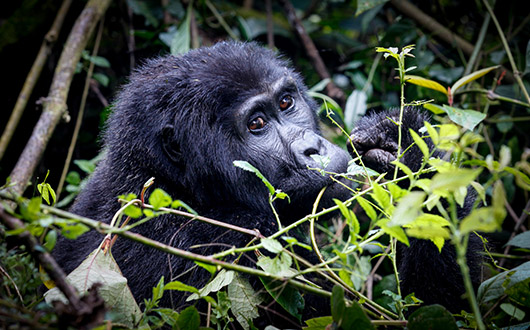
3 Day Gorilla Safari Cost from Kigali in 2027: Price, Permit and Full Itinerary
2027 Safari Price: US$2,200 per person sharing | 3 Days / 2 Nights | Private Safari | Kigali to Bwindi, Uganda
Quick answer — 3 day gorilla safari cost from Kigali in 2027: Abunda Discoveries Uganda’s indicative private package is US$2,200 per person sharing for two travellers, or US$4,400 for the couple. It includes one standard Uganda gorilla trekking permit per person, two nights near Bwindi, private Kigali return transfers and the services specified in the final quotation. The standard foreign non-resident permit component is US$800 per traveller, subject to the applicable official tariff.
Not included unless specified: international flights, immigration fees, travel insurance, porter fees and personal expenses. Booking status: proposed price, not a live permit or lodge availability confirmation.
There is a particular moment in planning an African safari when the excitement of seeing mountain gorillas meets a very practical question: how much money should I actually prepare? For travellers beginning their journey in Kigali, Rwanda, this question becomes even more interesting. They are not simply paying to see gorillas. They are arranging a journey across an international border, through two countries, into one of Africa’s most extraordinary mountain forests.
The 3 day gorilla safari cost from Kigali with Abunda Discoveries Uganda is US$2,200 per person for a proposed private 2027 package based on two guests sharing accommodation. The price includes a standard Uganda gorilla trekking permit, two nights of accommodation, private ground transportation, a professional driver-guide, meals as specified in the itinerary, and essential safari arrangements. Final inclusions and availability are confirmed in the written quotation.
What makes this journey worthwhile is not simply the number of days or the amount of money spent. It is the opportunity to leave the streets of Kigali, cross into southwestern Uganda, sleep close to a protected rainforest, and spend time observing mountain gorillas in their natural environment.
However, a responsible safari operator should explain more than the attractive parts of a journey. Travellers deserve to understand what their money pays for, why prices vary between companies, what can unexpectedly increase their expenses, and why a three-day itinerary must be planned carefully.
This guide from Abunda Discoveries Uganda examines those questions in detail. It is intended to help travellers make informed decisions before committing to their 2027 gorilla trekking adventure.
1. 3 Day Gorilla Safari Cost from Kigali: What US$2,200 Includes

For 2027, Abunda Discoveries Uganda offers a proposed three-day gorilla trekking safari from Kigali at US$2,200 per person sharing. This is a private safari rather than a scheduled group departure, meaning the journey is organized around the booked travellers rather than requiring them to join strangers.
For a couple travelling together, the indicative total is US$4,400. For one person travelling alone, the price requires a separate quotation because the vehicle, driver-guide, fuel, and accommodation costs cannot be shared in the same way.
There is an important distinction between a price per person and a price per safari. A traveller who sees an advertisement displaying US$2,200 may assume the amount covers an entire vehicle for two people. In this offer, US$2,200 represents the individual price when two people share the safari arrangements and accommodation.
| Safari detail | 2027 offer |
|---|---|
| Safari name | 3-Day Uganda Gorilla Trekking Safari from Kigali |
| Duration | 3 days and 2 nights |
| Starting point | Kigali, Rwanda |
| Gorilla destination | Bwindi Impenetrable National Park, Uganda |
| Price per person sharing | US$2,200 |
| Indicative total for two | US$4,400 |
| Gorilla permits | One standard permit per person included |
| Accommodation | Two nights |
| Transport | Private safari vehicle with driver-guide |
| Safari style | Private and customizable |
| Travel year | 2027 |
The quoted price should not be confused with the cost of a gorilla permit alone. A permit gives an eligible traveller access to a regulated trekking experience. It does not independently provide accommodation, international transfers, a safari vehicle, meals, or the services needed to organize the complete journey.
For travellers who want to compare this package with longer Uganda adventures, explore our Uganda gorilla trekking safaris and packages.
Before You Book: Compare the Real Total, Not Just the Advertised Price
Ask each operator to show a complete quote with the same number of travellers, trekking date, lodge category and inclusions. A US$1,400 advertisement that excludes an US$800 permit is not directly comparable to a US$2,200 permit-inclusive offer. Similarly, an offer that excludes meals or border transfers may cost more than its headline suggests.
| Question to compare | Abunda’s proposed 2027 offer | What to verify with any operator |
|---|---|---|
| Headline rate | US$2,200 per person sharing | Per person or total for the party? |
| Gorilla permit | One standard Uganda permit per guest included | Is the full permit fee included? |
| Accommodation | Two nights, lodge to be confirmed | Exact lodge, room category and sector? |
| Transfers | Private Kigali–Bwindi–Kigali journey | Airport pickup, fuel and border routing? |
| Food | Meals specified in the final itinerary | Which breakfasts, lunches and dinners? |
| Flexibility | Private itinerary, subject to confirmed arrangements | Cancellation terms and flight timing? |
Price transparency: The quoted figure is a proposed Abunda package price, not a claim that every operator charges the same amount. Request a dated written quotation before payment.
2. Why Does a Three-Day Gorilla Safari Cost US$2,200?
When a traveller sees a three-day tour priced at US$2,200, a natural reaction is to divide the amount by three. That produces approximately US$733 per day. From that perspective, the safari can initially appear expensive, especially when compared with an ordinary hotel holiday.
But a gorilla safari does not operate like an ordinary hotel holiday. One substantial expense is the gorilla trekking permit, which is attached to a specific trekking opportunity rather than to the number of nights spent in Uganda. The same standard permit cost applies whether a traveller visits Uganda for three days or combines the experience with a longer wildlife safari.
Another difference is geography. Kigali and Bwindi are located in different countries. A private safari therefore involves cross-border planning, suitable transportation, vehicle operating expenses, accommodation reservations, and coordination with park authorities.
The three-day duration also creates a concentrated operating schedule. The vehicle and driver-guide are required throughout the journey, even when guests are inside the forest trekking gorillas. Fuel must be purchased, accommodation must be reserved, and the operator must plan the return journey so that travellers can safely reach Kigali.
The price also reflects the importance of reliable arrangements. A low quotation becomes less attractive if the accommodation is far from the assigned trekking headquarters, the vehicle is unsuitable for mountain roads, or the itinerary assumes impossible transfer times.
At Abunda Discoveries Uganda, the purpose of presenting a complete package price is to help guests understand the overall travel commitment rather than discover essential expenses after arriving in Africa.
What the US$2,200 safari price represents
It represents an organized travel experience combining wildlife access, transport, accommodation, guiding, and logistical coordination. It should not be interpreted as a claim that every component is equally expensive or that the operator earns the difference between the gorilla permit and the final price as profit.
A tour operator must pay for services delivered by other businesses and institutions, manage operational costs, and allow for reasonable business expenses. The actual profit margin can only be calculated from the operator’s verified supplier costs, taxes, commissions, and other expenses.
3. The Real Cost of a Gorilla Trekking Permit in Uganda in 2027
The gorilla trekking permit is the foundation of the entire safari. Without a valid permit for the intended date, a traveller cannot simply arrive at Bwindi and expect to join a gorilla trekking group.
Under the published Uganda Wildlife Authority tariff information, the standard gorilla trekking permit for a foreign non-resident is US$800 per person in 2027. Different visitor categories may qualify for different official rates, and any seasonal promotional rates must be confirmed before booking.
For two foreign non-resident travellers paying the standard rate, the permit component alone amounts to US$1,600.
The permit is not an ordinary entrance ticket. It is connected to a carefully managed wildlife activity involving protected mountain gorillas, trained park personnel, conservation rules, and restrictions on visitor numbers.
What does the gorilla permit include?
A standard permit allows participation in an authorized gorilla trekking activity on the booked date. Once the gorilla family has been located and the ranger permits the viewing session to begin, visitors are normally allowed up to one hour with the gorillas.
That hour should not be confused with the total time spent in the forest. Travellers may walk for considerably longer before reaching the gorillas and must still return to the trekking starting point afterward.
One of the most important details to understand is that a permit is date-specific. Travellers should not book non-refundable flights or accommodation on the assumption that a permit will automatically be available.
Why are gorilla permits limited?
Mountain gorillas are wild animals living in a protected ecosystem. Their daily activities are not organized around tourism. They feed, rest, travel, and interact within their social groups, and tourism must operate within conservation limits.
Restricting the number of visitors helps regulate human contact with habituated gorilla families. The system also supports a more controlled experience than unrestricted access would allow.
Visitors should understand that the permit fee is not a payment for touching gorillas, approaching them whenever they wish, or extending the encounter beyond the permitted time.
Official information is available from the Uganda Wildlife Authority conservation tariffs.
4. Understanding the US$2,200 Safari Price Breakdown

Rushaga or Buhoma for gorilla trekking? Compare the two Bwindi sectors to choose the right location for your 2027 Uganda gorilla safari with Abunda Discoveries Uganda.
A useful way to understand the cost of a gorilla safari is to separate expenses into two categories: costs that belong directly to an individual traveller and costs that are shared between travellers.
The gorilla permit is an individual cost. Each guest needs a permit. Adding a second traveller therefore adds another permit expense.
The safari vehicle is different. Two guests can travel in the same vehicle, use the same driver-guide, and share much of the transportation expense. This is why the cost per person generally decreases as the number of travellers increases, although accommodation and permit expenses continue to apply individually.
The following table explains the principal components of the proposed package. It is not presented as Abunda’s audited internal cost statement, because supplier quotations and operational expenses can vary by date.
| Cost component | What the traveller is paying for |
|---|---|
| Gorilla permit | US$800 standard foreign non-resident permit |
| Accommodation | Two nights at an agreed lodge |
| Private vehicle | Dedicated transportation during the safari |
| Fuel | Road transfers between Kigali, the border, Bwindi and back |
| Driver-guide | Driving, travel coordination and destination assistance |
| Meals | Meals included in the confirmed package |
| Drinking water | Bottled drinking water during scheduled transfers |
| Operational arrangements | Reservations, supplier coordination and applicable operating costs |
Accommodation is more than a place to sleep
In an urban destination, travellers may choose a hotel based on its appearance, room size, or proximity to restaurants. Around Bwindi, the location of accommodation can have a much greater influence on the following day’s activities.
A lodge that looks close to the national park on a map may still be a considerable distance from the assigned trekking headquarters. Mountain roads can be winding, steep, and slow, especially during rainy weather.
For this reason, the best lodge for a three-day safari is not necessarily the most luxurious or the cheapest. It is one that offers appropriate comfort and a practical location relative to the confirmed trekking sector.
Why the driver-guide matters
A driver-guide contributes much more than the ability to operate a vehicle. The role involves understanding the itinerary, planning departure times, communicating with accommodation providers, and helping travellers navigate the practical requirements of a cross-border safari.
However, the safari driver-guide should not be confused with the Uganda Wildlife Authority ranger who leads the actual gorilla trek. The forest activity is managed by authorized park personnel.
Why fuel and vehicle expenses matter
Fuel costs are influenced by driving distances, vehicle type, road conditions, and the actual route. A safari vehicle must be suitable for the planned journey and properly maintained.
A private vehicle also allows travellers to make reasonable comfort stops and travel at a more flexible pace than a fixed group departure, although park briefing times and border procedures still impose practical limits.
5. Is US$2,200 Expensive for a 3-Day Gorilla Safari?
The answer depends on what is included and what the traveller expects.
For someone comparing a gorilla safari with a normal three-day city break, US$2,200 may seem substantial. For someone comparing private gorilla trekking packages that include permits, accommodation, cross-border transfers, and professional support, the more meaningful question is whether the quoted services justify the total price.
Travellers should be cautious about evaluating safari quotations using price alone. Two packages may share the same title but contain very different arrangements.
One package may include the gorilla permit, while another may advertise a lower starting price with the permit excluded. One may provide private transportation, while another relies on shared transfers. One may include two nights close to the trekking area, while another may use accommodation requiring a longer early-morning journey.
Even the term luxury can be misleading when it is not accompanied by the name of the accommodation, the room category, and the actual services included.
Seven smart questions to ask before choosing a safari
- Is the gorilla trekking permit included in the advertised price?
- Is the price based on one person or two people sharing?
- Will the safari be private or shared with other travellers?
- Which accommodation is included, and in which trekking sector?
- Are meals, fuel, and scheduled transfers included?
- What happens if the preferred gorilla trekking date is unavailable?
- What are the written cancellation and refund conditions?
A good quotation should answer these questions without requiring the traveller to discover the information through repeated messages.
At Abunda Discoveries Uganda, the proposed US$2,200 price is intended to provide a clear starting point for a complete private safari. Any requested upgrades, additional nights, unusual transfers, or changes in the number of travellers should be quoted separately.
6. Why Start a Uganda Gorilla Safari from Kigali Instead of Entebbe?
Looking at a map of East Africa reveals an interesting geographical reality. Uganda’s mountain gorilla habitats are located in the southwest of the country, close to Rwanda and the Democratic Republic of the Congo.
Entebbe International Airport is Uganda’s principal international aviation gateway, but it lies much farther from Bwindi by road than Kigali does from several of Bwindi’s southern trekking areas.
This creates a useful travel opportunity. Visitors can arrive in Rwanda, spend a short time in Kigali, cross into Uganda, and reach the gorilla trekking region without first travelling across much of Uganda.
The advantage is particularly meaningful for travellers who have limited holiday time or who are combining a Rwanda visit with a Uganda wildlife experience.
Does starting in Kigali make the gorilla permit cheaper?
No. The gorilla permit price is determined by the relevant Uganda Wildlife Authority tariff and visitor category, not by the international airport used to begin the journey.
The potential saving comes from travel logistics. Depending on the selected trekking sector, Kigali can reduce road transfer distances and the number of additional travel days needed.
Does Kigali always provide the shortest journey?
Not for every gorilla trekking location. The most practical route depends on the sector, border crossing, road conditions, and exact pickup point.
For southern Bwindi destinations such as Rushaga and Nkuringo, Kigali can be a convenient starting point. For other sectors, the journey may require more driving.
Travellers should also remember that an international border is involved. The distance shown by a navigation application does not account fully for immigration formalities, comfort stops, and unexpected delays.
7. Detailed 3-Day Gorilla Trekking Safari from Kigali Itinerary
The following itinerary explains how a three-day journey can be arranged without unnecessarily rushing the gorilla trekking experience. It assumes that the traveller’s international arrival time permits a practical transfer on the first day.
Day 1: Kigali Pickup, Cross into Uganda and Travel to Bwindi
Your safari begins in Kigali, where your driver-guide meets you at the agreed pickup location. This may be Kigali International Airport or a hotel within the city, depending on your travel arrangements.
Before departure, there should be enough time to confirm that your travel documents are available, discuss the day’s route, and explain the approximate journey ahead.
Leaving Kigali introduces travellers to the changing landscape of Rwanda. Urban streets gradually give way to cultivated hillsides, smaller trading centres, rural settlements, and roads winding through the country’s mountainous countryside.
Unlike a game drive, the first day is primarily a transfer day. Its value lies in the scenery, the introduction to the region, and the opportunity to arrive close to the gorilla habitat before the following morning.
The driver-guide will use the border crossing appropriate for the confirmed itinerary. For some southern Bwindi arrangements, the Cyanika crossing is practical. Other itineraries may use Katuna/Gatuna.
At the border, travellers must complete the required exit and entry procedures. The driver-guide can assist with practical coordination, but immigration decisions remain the responsibility of the relevant authorities.
Once inside Uganda, the scenery changes again. The route may pass through the Kisoro or Kabale region, depending on the destination. Travellers begin to encounter the landscapes of southwestern Uganda, where steep hills, cultivated valleys, settlements, and forested mountains form a distinctive environment.
As the journey approaches Bwindi, the importance of road conditions becomes more noticeable. Some access roads are winding or unpaved, and travel can be slower than expected.
The aim is to reach the lodge with enough time to settle in, enjoy dinner, and prepare for the next morning.
Accommodation: A confirmed lodge appropriate to the allocated trekking sector, such as Rushaga Gorilla Lodge when suitable and available.
Meals: Dinner, with other meals depending on the confirmed arrival arrangements.
Important: Travellers arriving in Kigali late in the afternoon or evening may need an additional night before beginning the transfer.
Day 2: Gorilla Trekking in Bwindi Impenetrable National Park
The second day is the reason the entire journey was planned.
After an early breakfast, travellers prepare for departure to the assigned gorilla trekking headquarters. Clothing, footwear, drinking water, packed lunch, and personal essentials should already be organized.
There is a different feeling to this morning compared with the first day. The journey is no longer about covering distance between countries. It is about entering a protected forest and searching for one of the world’s most remarkable primates.
At the trekking headquarters, park personnel conduct a briefing covering the rules of the activity, expected behaviour around gorillas, and other important safety information.
Visitors are then assigned to trekking groups and guided by authorized park rangers. The allocation process considers operational requirements, gorilla locations, and other relevant factors. Travellers with mobility concerns should communicate these before the trek.
Once the walk begins, the forest becomes the centre of attention. The route may pass through vegetation, muddy sections, steep slopes, or areas where careful footing is necessary.
The duration of the walk is unpredictable because mountain gorillas move within their habitat. A family that was relatively close to a trail on one day may be farther away on another.
This uncertainty is part of what distinguishes gorilla trekking from visiting animals in captivity. The forest is not arranged to produce an encounter at a fixed time.
When the trackers and rangers locate the gorilla family and the group reaches an appropriate viewing position, the regulated observation period begins.
Travellers may see gorillas feeding, resting, grooming, moving through vegetation, or interacting with other members of the family. What happens depends entirely on the animals’ natural behaviour.
A silverback may remain still while other gorillas move nearby. Young gorillas may play or investigate their surroundings. At other times, the group may be relatively quiet, with individuals feeding or resting.
The purpose is not to encourage the animals to perform. It is to observe their lives respectfully while following the ranger’s instructions.
Visitors must maintain the required separation, avoid touching the gorillas, follow health precautions, and refrain from flash photography.
After the permitted viewing period, the group leaves the gorillas and begins the return journey. The walk back can also require physical effort, particularly where the terrain is steep or slippery.
Depending on the duration of the trek, travellers may return to the lodge during the afternoon. The remainder of the day is generally best kept flexible.
Some guests may want to rest, review photographs, or enjoy the lodge surroundings. Others may be interested in an optional cultural or community activity if sufficient time remains and the activity is available.
Accommodation: Same lodge as Day 1.
Meals: Breakfast, packed lunch and dinner.
Main activity: One standard mountain gorilla trekking experience.
RESERVE A PRIVATE GORILLA TREKKING SAFARI
Day 3: Leave Bwindi and Return to Kigali
The final day begins with breakfast and preparation for the return journey to Rwanda.
After checking out of the lodge, your driver-guide begins the transfer toward the appropriate international border.
The return drive offers another opportunity to appreciate southwestern Uganda’s countryside. Travellers may notice details that were less obvious during the outward journey, from agricultural landscapes to small towns and the mountain scenery surrounding the route.
At the border, immigration formalities must be completed again. The time required can vary, so travellers should avoid assuming that crossing will always be immediate.
After re-entering Rwanda, the journey continues to Kigali, where the safari ends at the agreed hotel or airport.
For travellers departing on an international flight, the flight time must be checked carefully before the itinerary is confirmed. An early afternoon flight may be unsuitable for a same-day return from Bwindi.
When flight connections are tight, an additional night in Kigali may be the more responsible choice.
Meals: Breakfast, with lunch according to the confirmed quotation.
Accommodation: None; the safari ends in Kigali.
8. What Is the Best Gorilla Trekking Sector for a Safari from Kigali?
Bwindi Impenetrable National Park is not a single entrance with all gorilla trekking groups beginning from the same location. The park has several trekking sectors, and understanding their differences is essential when organizing accommodation and transfers.
Rushaga Sector
Rushaga is located in southern Bwindi and is a practical option for some Kigali-based itineraries. Its position makes it relevant for travellers entering Uganda through the Kisoro region.
The sector is known for gorilla trekking opportunities and access to surrounding accommodation facilities. However, the terrain can still be demanding, and the location of gorilla families changes.
Nkuringo Sector
Nkuringo is another southern Bwindi trekking area, associated with dramatic mountainous landscapes and steep terrain.
It can appeal to travellers who appreciate remote mountain scenery, but visitors should not assume that the walking experience will be easy.
Ruhija Sector
Ruhija is situated in a higher-altitude part of Bwindi. Its forest environment and location create a different experience from the southern sectors.
Travellers using Ruhija need an itinerary and accommodation arrangement appropriate to that location.
Buhoma Sector
Buhoma is one of Bwindi’s established gorilla trekking areas and has a range of accommodation options.
However, it is not automatically the most convenient sector for a short journey from Kigali. The actual route and driving requirements must be considered.
Should travellers choose the sector before the permit?
The preferred sector and permit availability should be considered together. Selecting a lodge first and discovering later that the confirmed permit is for a distant sector can create unnecessary early-morning driving.
For a well-organized three-day safari, permit arrangements and accommodation should be coordinated rather than treated as unrelated bookings.
9. Crossing the Rwanda–Uganda Border: What Travellers Need to Know
A Kigali-to-Bwindi safari crosses an international boundary. This is an important part of the itinerary, not a minor detail that should be ignored until the day of travel.
Entry requirements depend on nationality, immigration status, travel history, and the visa arrangements used.
Travellers should verify the rules that apply to their passports through official immigration channels before departure.
Do you need a Uganda visa?
Many international visitors require an appropriate visa or other valid permission to enter Uganda. Requirements differ by nationality, and travellers should not assume that a visa can always be purchased on arrival at the land border.
Where a visa is required, the appropriate application should be completed through official channels before travel.
What is the East Africa Tourist Visa?
The East Africa Tourist Visa is a regional tourism arrangement covering Uganda, Rwanda and Kenya under its applicable conditions.
It may be useful for eligible travellers visiting more than one of these countries. However, the country of first entry and other conditions matter, so visitors must verify that the visa is suitable for their particular itinerary.
Official information is available from the Uganda Directorate of Citizenship and Immigration Control.
Documents to prepare
- A passport meeting the applicable validity requirements.
- The correct visa or immigration authorization, where required.
- Relevant vaccination documentation where applicable.
- Confirmed safari itinerary and accommodation information.
- Return or onward travel details when required.
- Travel insurance and emergency contact information.
Border procedures may change before 2027. The safari operator can help guests prepare, but travellers remain responsible for meeting immigration and health-entry requirements.
10. Is Gorilla Trekking in Uganda Cheaper Than Gorilla Trekking in Rwanda?
Uganda and Rwanda both offer opportunities to observe mountain gorillas in protected natural habitats. However, the total cost of a safari depends on much more than the country name.
Rwanda’s gorilla trekking takes place in Volcanoes National Park, while Uganda’s principal gorilla trekking destinations are Bwindi Impenetrable National Park and Mgahinga Gorilla National Park.
Uganda’s standard foreign non-resident permit has historically been considerably less expensive than Rwanda’s standard international visitor permit. Travellers should verify the prevailing Rwanda tariff before making a 2027 comparison.
For someone already staying in Kigali, Uganda can therefore be an attractive alternative. The traveller may begin and end the safari in Rwanda while undertaking the gorilla trekking activity in Uganda.
However, the cheaper permit does not automatically mean the cheapest complete holiday. Crossing the border, adding accommodation nights, and travelling farther by road can reduce the difference between the two options.
The appropriate comparison is the complete itinerary, not simply the permit fee.
When Rwanda may be more convenient
Rwanda may suit travellers who want to minimize international border crossings or have very limited time and prefer to remain within one country.
When Uganda may offer better value
Uganda can appeal to travellers who want to reduce permit expenditure, explore Bwindi’s rainforest environment, or combine gorilla trekking with other Ugandan wildlife experiences.
For guests with three days available and a preference for a private journey, the Kigali-to-Bwindi arrangement provides an option worth comparing carefully.
11. Budget, Midrange and Luxury Gorilla Safaris: What Really Changes?
The words budget, midrange and luxury are widely used in safari advertising. Unfortunately, they do not always have consistent meanings.
One company may describe a lodge as midrange because of its room rates. Another may classify the same property differently based on its facilities, service style, or location.
Rather than relying entirely on labels, travellers should examine the actual accommodation, transportation, meal arrangements, and degree of privacy.
Budget gorilla safaris
Budget safaris usually emphasize essential services and simpler accommodation. They may use modest lodges or guesthouses while maintaining the required gorilla permit and authorized trekking arrangements.
A budget safari should not mean ignoring vehicle safety, using unqualified personnel, or failing to provide clearly stated services.
Midrange gorilla safaris
Midrange packages generally balance comfort and cost. They may include private rooms, reliable meal arrangements, and lodges offering convenient access to the trekking region.
For many travellers, this balance is more important than having the most expensive accommodation available.
Luxury gorilla safaris
Luxury packages may offer higher-end lodges, premium room categories, enhanced dining, and additional personalized services.
However, the luxury lodge does not change the fundamental rules of gorilla trekking. Visitors still participate in an authorized trekking activity, follow ranger instructions, and observe the same conservation restrictions.
Where does Abunda’s US$2,200 offer fit?
The proposed package is a private, comfort-oriented safari. The final accommodation standard should be described using the specific lodge and room category confirmed for the guest, rather than relying on an unsupported luxury classification.
Travellers seeking a different accommodation standard can request a customized quotation.
12. What Is Included in Abunda Discoveries Uganda’s US$2,200 Safari?

For the proposed 2027 package, the following services form the intended core inclusions. The final booking document should confirm each item before payment.
- One standard Uganda gorilla trekking permit per person.
- Private safari transportation from Kigali and back.
- Services of a professional English-speaking driver-guide.
- Fuel for the scheduled road itinerary.
- Two nights of accommodation in the Bwindi region.
- Breakfast, lunch and dinner as specified in the final itinerary.
- Bottled drinking water during scheduled transfers.
- Scheduled airport or hotel pickup and drop-off in Kigali.
- Assistance with safari reservations and itinerary coordination.
- Applicable operator-arranged activities specifically listed in the final quotation.
What is not included?
- International air tickets.
- Visa and immigration charges.
- Travel and medical insurance.
- Personal purchases and souvenirs.
- Alcoholic beverages unless specifically included.
- Tips for rangers, porters, lodge staff and driver-guides.
- Optional activities not listed in the itinerary.
- Additional hotel nights before or after the safari.
- Extra transfers outside the agreed route.
- Costs arising from personal itinerary changes.
Travellers should also understand that a standard gorilla trekking permit does not include every optional service that may be available at the trekking headquarters.
For example, a porter may be hired separately to carry a daypack and provide practical support along difficult sections of the trail.
The final invoice and written confirmation take precedence over general descriptions on a website.
13. How Much Does a 3-Day Gorilla Safari Cost for Couples, Families and Groups?
The number of travellers has a direct influence on the cost of a private safari.
A couple can share one vehicle and a double or twin room. A solo traveller normally carries more of the vehicle and accommodation expense individually.
For a group of four, certain shared operating costs can be divided between more people. However, the gorilla permit remains an individual expense for each participant.
| Travellers | 2027 pricing guidance |
|---|---|
| One person | Solo supplement quotation required |
| Two people sharing | US$2,200 per person; US$4,400 total |
| Three people | Custom private group quotation |
| Four people | Custom private group quotation |
| Five or six people | Custom group quotation subject to permits and vehicle capacity |
Is travelling as a couple better value?
For many private safari arrangements, two travellers sharing can achieve a practical balance between cost and privacy.
They share transportation expenses while retaining the flexibility of a private itinerary.
Can a family book the same safari?
Yes, provided every participant undertaking gorilla trekking meets the applicable age and health requirements. Gorilla trekking in Uganda generally has a minimum participant age of 15 years.
Families with younger children need an alternative plan for those children during the gorilla trekking activity.
Can a group of six trek together?
A group can request coordinated permits, but actual availability and ranger allocation determine the arrangements. Booking early is especially important when several travellers want to trek on the same date.
14. The Best Time to Book a 3-Day Gorilla Safari from Kigali
Gorilla trekking is possible throughout the year, but the experience of travelling through Bwindi changes with the seasons.
Visitors should distinguish between the best time for comfortable walking conditions and the best time for finding available permits or attractive accommodation arrangements.
June to September
These months are generally associated with one of the region’s relatively drier periods. Conditions can be more favourable for walking, although rainfall remains possible in a tropical mountain forest.
Demand for gorilla permits and accommodation can be strong during popular international holiday periods.
December to February
This is another period that many travellers consider because of relatively drier conditions.
Holiday travel demand may influence lodge availability and overall package pricing.
March to May
These months are often wetter. Forest trails can become muddy and slippery, and travellers should be prepared for rain.
Some travellers prefer these months because they may encounter different availability patterns or qualifying promotional offers.
October and November
Rainfall is often an important consideration during this period. Travellers should plan for variable trail conditions and allow sufficient time for road transfers.
Can a rainy-season safari still be worthwhile?
Yes. The gorillas continue living in their natural habitat throughout the year, and authorized trekking activities operate subject to park conditions and management decisions.
However, a lower seasonal price should not be the only consideration. Travellers with knee problems, limited mobility, or concerns about slippery terrain may prefer to prioritize their physical comfort.
Any official discounted permit rate must be checked for the specific 2027 date and eligibility category before being included in a quotation.
15. How Difficult Is Gorilla Trekking in Bwindi?
Gorilla trekking requires a willingness to walk in a natural forest environment where conditions cannot be fully predicted.
The experience is not the same as walking along a paved nature trail. Some routes involve slopes, roots, vegetation, uneven ground, and sections that become slippery after rain.
The physical demands vary between trekking groups and from one day to another.
A traveller who completes a relatively short trek should not assume that every visitor will have the same experience. Equally, a person who has read about a particularly demanding trek should not conclude that all gorilla trekking is equally difficult.
Can older travellers go gorilla trekking?
Many older adults are interested in gorilla trekking, and age alone does not determine whether a person can participate comfortably.
Walking ability, balance, endurance, underlying health conditions, and the availability of appropriate assistance are more useful considerations.
Travellers with mobility concerns should discuss their needs before booking. Porters and, where available and suitable, organized carrying assistance may be considered, but such services must be arranged and confirmed rather than assumed.
Should you train before travelling?
Travellers who are not accustomed to walking on uneven terrain may benefit from preparing in advance through appropriate walking and fitness activities.
Those with existing medical conditions should seek individualized advice from a qualified healthcare professional before undertaking strenuous activity.
Comfortable, supportive footwear and realistic expectations are also important.
What if the gorillas are far away?
The ranger team manages the trekking activity according to the gorillas’ location and prevailing conditions.
No responsible operator should guarantee a particular walking distance or promise that every guest will receive the shortest possible route.
Guests should communicate their limitations during booking and again during the pre-trek briefing.
16. What Should You Pack for a 3-Day Gorilla Safari?
For a short gorilla safari, travellers do not need to bring everything they would pack for a long African expedition. However, the items they choose should match the forest environment.
One common mistake is preparing only for warm African weather. Bwindi is a mountainous rainforest, and conditions can be cool, wet, or muddy.
Recommended clothing
- Long-sleeved shirts suitable for forest walking.
- Comfortable long trousers.
- Waterproof jacket or rain protection.
- Sturdy hiking boots with reliable grip.
- Long socks suitable for trekking.
- Lightweight layers for cooler mornings.
- A change of clothes for after the trek.
Useful trekking equipment
- Small daypack.
- Refillable water container or suitable drinking water.
- Camera with a charged battery.
- Spare memory card.
- Insect repellent.
- Sun protection.
- Personal medication.
- Waterproof protection for electronics.
- Walking stick or trekking pole where permitted.
Should you carry a large camera?
Photography equipment should be chosen with the walking conditions in mind. A heavy camera bag may become uncomfortable on steep or slippery terrain.
Travellers interested in photography should prioritize equipment they can carry safely and operate without delaying the group.
Flash photography is not permitted around the gorillas.
What should remain at the lodge?
Large suitcases and unnecessary belongings are best left securely at the accommodation during the trek.
Carrying less weight can make walking more comfortable and reduce fatigue.
17. The Hidden Costs Travellers Sometimes Forget
A well-prepared traveller should distinguish between the safari package price and the complete cost of the holiday.
The US$2,200 Abunda safari price does not necessarily represent the total amount a visitor will spend from the moment they leave home until they return.
International flights
Air tickets to Kigali are separate unless expressly included in a package. Their prices depend on the departure country, airline, travel dates, and booking conditions.
Visa expenses
Travellers may need to pay for immigration permissions appropriate to their nationality and itinerary.
Travel insurance
Insurance should be considered carefully because the safari includes international travel and outdoor activity in a remote environment.
Travellers should verify coverage for trekking, medical treatment, evacuation, cancellation, and any pre-existing conditions.
Porter services
Hiring a porter is optional for many travellers, but it can be valuable for carrying equipment and providing practical assistance along challenging sections.
Porter charges and availability should be confirmed locally or in advance.
Tips and gratuities
Some travellers choose to tip guides, rangers, porters, or accommodation staff in appreciation of service.
Tips should not be misrepresented as compulsory unless a specific charge has been clearly disclosed in advance.
Extra accommodation nights
Guests arriving in Kigali late or departing on an early flight may need an additional night.
It is better to budget for a necessary overnight stay than to design an unrealistic transfer schedule.
Personal expenses
Souvenirs, drinks, laundry, telephone expenses, and optional activities can add to the total holiday budget.
Asking for an itemized quotation helps travellers distinguish essential services from personal spending choices.
18. Can You Combine Gorilla Trekking with Golden Monkey Tracking?
Golden monkey tracking is another primate experience available in the wider Virunga region, including Mgahinga Gorilla National Park in Uganda and Volcanoes National Park in Rwanda.
Some travellers are interested in seeing both mountain gorillas and golden monkeys during one holiday.
However, a three-day itinerary from Kigali to Bwindi already includes two transfer days and one main gorilla trekking day. Adding golden monkey tracking requires careful scheduling.
The activities take place under separate arrangements, and additional permits, accommodation, or travel time may be required.
Travellers should not assume that golden monkey tracking is automatically included in the US$2,200 gorilla-only package.
For visitors with a strong interest in primates, a longer itinerary may provide a more comfortable experience than attempting to fit too many activities into three days.
Abunda Discoveries Uganda can prepare a separate quotation for a customized gorilla and golden monkey safari.
19. Is a 3-Day Gorilla Safari from Kigali Worth It?
There is no universal answer to whether a wildlife experience is worth its price. Travellers have different interests, budgets, physical abilities, and expectations.
For someone who has dreamed of seeing mountain gorillas in their natural habitat, the opportunity may be a central reason for travelling to East Africa.
For someone primarily interested in traditional savannah game drives, a different Uganda safari may provide more of the activities they enjoy.
A three-day gorilla safari is particularly suitable for travellers who want to focus on one major wildlife experience rather than visit several national parks in a limited period.
The itinerary also works well for guests who are already visiting Rwanda and want to add Uganda’s mountain gorillas without undertaking a long journey from Entebbe.
What makes the experience different from an ordinary wildlife drive?
During a game drive, visitors usually remain in a vehicle while searching for wildlife across open landscapes.
Gorilla trekking is different. Travellers enter a forest on foot, accompanied by authorized guides and rangers, and must adapt to the natural environment.
The experience involves patience, physical movement, and respect for wildlife boundaries.
It is not designed around a guaranteed photographic pose or a fixed sequence of animal behaviour.
What should travellers expect emotionally?
People respond differently to wildlife encounters. Some concentrate on taking photographs, others prefer watching quietly, and some find the experience more meaningful than they expected.
A responsible article should not promise that every traveller will cry, feel transformed, or experience a particular emotional reaction.
The value lies in the opportunity to observe wild mountain gorillas responsibly, with the understanding that every encounter is different.
20. Why Private Gorilla Safaris Can Be Better for Some Travellers
Private safaris are often associated with luxury, but privacy can also be a practical travel choice.
For a couple, a private safari means they can travel together without coordinating every road transfer with unrelated guests.
For older travellers, private transport may allow more suitable comfort stops and a pace that reflects their preferences.
For photographers, private road transfers can provide flexibility for appropriate scenery stops, although photography during gorilla trekking remains subject to ranger instructions and group rules.
For families, private travel may simplify luggage arrangements and accommodation planning.
However, private ground transportation does not mean the gorilla trekking activity itself will be exclusive. Standard gorilla trekking is organized by park authorities, and visitors may be grouped with other permit holders.
Travellers who want an exclusive wildlife activity should ask specifically what is possible and what additional conditions or charges would apply.
21. Why Choosing the Right Accommodation Matters More Than Many Travellers Realize
Accommodation is one of the most important decisions in a short gorilla trekking itinerary.
Consider a traveller who books a comfortable lodge without checking its location relative to the assigned trekking sector. The room may be excellent, but the following morning could involve an unnecessarily long drive before the trek even begins.
That extra journey may require an earlier wake-up time, reduce rest, and create avoidable pressure to reach the briefing point.
For a three-day safari, convenience and location deserve serious consideration.
What should travellers ask about their lodge?
- How far is it from the confirmed trekking headquarters?
- What is the expected driving time in normal conditions?
- Are the access roads suitable during wet weather?
- Does the room arrangement match the booking?
- Are meals available at the times required by the itinerary?
- Can the lodge prepare a packed lunch for trekking?
- Are there steep steps or difficult pathways around the property?
These details are especially relevant for senior travellers and guests with limited mobility.
A lodge does not have to be extremely expensive to serve the needs of a well-organized gorilla safari.
22. What Happens If Your Gorilla Trekking Permit Is Unavailable?
Gorilla permits are limited, and travellers should not assume that every requested date will have availability.
If the preferred date is unavailable, several alternatives may be considered.
The traveller may choose another date, consider another suitable trekking sector, or adjust the itinerary to match available permits.
In some cases, adding an extra day can create more flexibility, although it also changes the package cost.
Abunda Discoveries Uganda should confirm permit availability before representing a safari date as secured.
When is the booking confirmed?
A quotation alone does not reserve a gorilla permit. Confirmation requires the appropriate booking and payment procedures to be completed and acknowledged.
Travellers should receive written confirmation identifying the booked services, travel dates, payment conditions, and relevant cancellation rules.
Foreign non-resident permit purchases are subject to Uganda Wildlife Authority’s authorized booking procedures.
For official guidance, consult the Uganda Wildlife Authority permit purchase advisory.
23. What If You Become Sick Before Gorilla Trekking?
Mountain gorillas are vulnerable to certain diseases that can be transmitted by humans. Protecting their health is an essential part of responsible tourism.
Travellers who develop symptoms of an infectious illness should inform the relevant park personnel and their tour operator before trekking.
Park authorities determine whether participation is appropriate under the applicable health and conservation rules.
Visitors should not conceal illness because they are worried about losing the value of their permit.
Refunds, rescheduling, or other arrangements depend on the official rules and the circumstances of the case. They should never be promised without confirmation.
This is another reason to obtain appropriate travel insurance and understand booking conditions before departure.
24. How Safe Is the Kigali to Bwindi Gorilla Safari?
Safety begins with preparation rather than with promises that nothing unexpected will happen.
A properly organized safari should account for vehicle condition, realistic driving times, appropriate accommodation, valid travel documents, and the physical requirements of trekking.
Visitors should follow the instructions of their driver-guide during road transfers and the directions of authorized park rangers during forest activities.
They should also check official travel advisories for both Rwanda and Uganda before departure.
Road travel safety
Mountain roads require careful driving, particularly during rainfall or when visibility is reduced.
Itineraries should avoid unnecessary rushing, and travellers should allow adequate time for transfers.
Forest safety
Gorilla trekking takes place in a wild environment. Visitors must remain with the authorized group and follow ranger instructions.
Gorillas should never be approached independently or treated as tame animals.
Personal health preparation
Travellers should consider their fitness, medical requirements, travel vaccinations, and insurance coverage before the safari.
Those with significant mobility or health concerns should disclose relevant practical limitations during planning and obtain appropriate professional advice.
25. How Far in Advance Should You Book a 2027 Gorilla Safari?
The ideal booking period depends on the intended travel dates, group size, accommodation preferences, and flexibility.
Travellers planning to visit during popular holiday periods should begin enquiries early because both permits and preferred accommodation can become limited.
Booking early is especially useful for groups that require several permits on the same day.
However, advance booking does not mean paying without receiving documentation. Travellers should first review the quotation, confirm the proposed services, and understand the payment and cancellation terms.
Before paying a deposit, confirm these details
- Exact safari dates.
- Number of travellers.
- Price per person and total price.
- Gorilla permit arrangements.
- Accommodation names or agreed alternatives.
- Meal plan.
- Pickup and drop-off locations.
- Payment schedule.
- Cancellation and refund conditions.
- Emergency contact details.
A clear written agreement helps prevent misunderstandings and provides a useful reference throughout the planning process.
26. Why Book Your 2027 Gorilla Safari with Abunda Discoveries Uganda?
Choosing a safari operator is not simply a matter of finding someone who can arrange transportation. It is about finding a company willing to explain the journey clearly and organize the different components around the traveller’s needs.
Abunda Discoveries Uganda offers private Uganda and Rwanda safari planning, including gorilla trekking itineraries beginning in Kigali.
For the proposed 2027 three-day package, the company presents a US$2,200 per person sharing price as a starting point for an organized private journey.
Guests can request clarification about accommodation, permits, transfer arrangements, group size, and additional activities before confirming their booking.
The advantage of a customized safari is that the itinerary can be discussed before the journey rather than forcing every traveller into the same arrangement.
Planning for couples
Couples can request private transport, double or twin accommodation, and a travel schedule that matches their arrival and departure flights.
Planning for solo travellers
Solo guests can request an individual quotation reflecting their vehicle and accommodation requirements.
Planning for mature and senior travellers
Older guests can discuss walking limitations, accommodation access, road transfer comfort, and assistance requirements before making a booking.
Planning for wildlife photographers
Photographers can discuss luggage, camera equipment, and itinerary timing, while recognizing that gorilla trekking rules and wildlife behaviour remain outside the operator’s control.
For more safari inspiration, visit the Abunda Discoveries Uganda homepage or explore our gorilla trekking safari collection.
PLAN YOUR 2027 GORILLA SAFARI WITH ABUNDA DISCOVERIES UGANDA
27. Thirty Frequently Asked Questions About 3-Day Gorilla Safari Costs from Kigali
1. How much does a 3-day gorilla safari from Kigali cost in 2027?
Abunda Discoveries Uganda’s proposed 2027 price is US$2,200 per person for two travellers sharing accommodation on a private safari. The intended package includes one standard Uganda gorilla trekking permit per person, two nights of accommodation, scheduled private transfers, and other agreed safari services. The final price is subject to confirmation of availability and inclusions.
2. What is the cheapest way to see mountain gorillas from Kigali?
The cheapest practical arrangement depends on permit prices, accommodation, transportation, and the number of travellers. Sharing vehicle expenses and choosing simpler accommodation may reduce the overall cost. However, travellers should compare complete quotations rather than advertisements that exclude essential services.
3. How much is a Uganda gorilla trekking permit in 2027?
The published standard permit rate for a foreign non-resident is US$800. Other official visitor categories and qualifying promotional periods may have different rates. Travellers should confirm the applicable tariff with Uganda Wildlife Authority or an authorized operator before booking.
4. Is the gorilla permit included in the US$2,200 package?
Yes. The proposed Abunda Discoveries Uganda package includes one standard Uganda gorilla trekking permit per person. The final quotation should identify this inclusion clearly.
5. Is US$2,200 the price for two people?
No. US$2,200 is the advertised price per person based on two travellers sharing. The indicative total for two people is US$4,400.
6. Can one person book a private 3-day gorilla safari?
Yes. Solo travellers can request a private safari, but the cost is quoted separately because one guest covers more of the transportation and accommodation expenses.
7. Is gorilla trekking cheaper in Uganda than Rwanda?
Uganda generally offers a lower standard foreign non-resident gorilla permit price than Rwanda. However, the total safari cost depends on transfers, accommodation, travel dates, and other arrangements.
8. Can I visit Uganda’s mountain gorillas while staying in Rwanda?
Yes. Travellers can begin in Kigali, cross into Uganda, trek gorillas in Bwindi, and return to Kigali. They must meet the applicable immigration requirements for both countries.
9. How long does it take to drive from Kigali to Bwindi?
The drive to some southern Bwindi locations can take approximately four to six hours under favourable conditions, but the actual journey depends on the selected sector, border crossing, traffic, road conditions, and stops. Other sectors may take longer.
10. Is three days enough for gorilla trekking from Kigali?
Three days can be sufficient for a focused itinerary with a transfer to Bwindi on Day 1, gorilla trekking on Day 2, and a return to Kigali on Day 3. Flight times and permit availability must be coordinated carefully.
11. Which Bwindi gorilla trekking sector is closest to Kigali?
Southern Bwindi sectors such as Rushaga and Nkuringo can be convenient for Kigali-based itineraries. The best choice depends on permit availability, road access, and accommodation arrangements.
12. Can I book a gorilla safari from Kigali Airport?
Yes. Kigali International Airport can be used as the pickup or drop-off point when the flight schedule allows sufficient time for the journey. Late arrivals may require an additional overnight stay.
13. Do I need a visa to travel from Kigali to Bwindi?
Visa requirements depend on nationality and immigration status. Travellers should verify the requirements for entering Uganda and returning to Rwanda before departure.
14. Can I use an East Africa Tourist Visa?
Eligible travellers may be able to use the East Africa Tourist Visa, subject to its conditions, including the relevant first-entry requirements. The visa should be obtained through the appropriate official process.
15. Does the safari price include accommodation?
Yes. The proposed US$2,200 package includes two nights of accommodation. The specific lodge, room category, and meal plan should be stated in the final booking confirmation.
16. Can I choose a luxury lodge in Bwindi?
Yes. Travellers can request an accommodation upgrade. The revised price will depend on the selected lodge, room category, dates, and availability.
17. Can I travel with children on a gorilla safari?
Families can travel to the Bwindi region, but gorilla trekking has a minimum participant age of 15 years. Alternative arrangements are necessary for younger children.
18. How many hours do you spend with mountain gorillas?
Standard gorilla trekking normally permits up to one hour with the gorilla family after it has been located and the viewing period begins. The walk to and from the gorillas takes additional time.
19. How difficult is gorilla trekking in Bwindi?
The difficulty varies according to the location of the gorillas, terrain, weather, and individual fitness. Visitors may encounter steep, muddy, or uneven trails. No operator can guarantee an easy route.
20. Can senior travellers go gorilla trekking?
Yes, some senior travellers can participate successfully, depending on their mobility, fitness, and health. Guests with limitations should discuss their needs before booking and seek medical advice when appropriate.
21. Can I hire a porter during gorilla trekking?
Porter services may be available to assist with carrying bags and navigating difficult sections. Travellers should confirm the current charges and arrangements before the trek.
22. What happens if it rains during gorilla trekking?
Rain is possible throughout the year in Bwindi. Trekking may continue in wet conditions when park authorities consider it appropriate. Visitors should bring waterproof clothing and footwear suitable for slippery trails.
23. Are mountain gorilla sightings guaranteed?
Gorilla trekking is organized with experienced tracking and ranger teams, but the animals remain wild and their movements cannot be controlled. A responsible operator should never guarantee a particular sighting, distance, or animal behaviour.
24. Can I take photographs of mountain gorillas?
Yes. Photography is generally permitted under park rules, but flash photography is prohibited. Visitors must follow ranger instructions and avoid disturbing the animals.
25. What is the best month for a 3-day gorilla safari?
Relatively drier periods, commonly June to September and December to February, are popular with travellers concerned about muddy trails. However, gorilla trekking is possible throughout the year, subject to park conditions.
26. Are gorilla safari prices lower during the rainy season?
Some accommodation providers may offer seasonal pricing, and official permit promotions may apply during specified periods. Travellers should verify eligibility and current rates rather than assuming every rainy-season safari is discounted.
27. Can I combine gorilla trekking and golden monkey tracking in three days?
It may be possible with a carefully adjusted itinerary, but the additional activity requires separate planning and may involve extra permits, accommodation, or travel time. It is not automatically included in the gorilla-only package.
28. How far in advance should I book my 2027 gorilla safari?
Travellers should enquire as early as practical, particularly during popular travel months or when booking several permits. The appropriate booking lead time depends on actual permit and accommodation availability.
29. What happens if I cancel my gorilla safari?
Cancellation charges and any potential refund depend on the written booking terms, supplier policies, and applicable Uganda Wildlife Authority permit rules. Travellers should review these conditions before making payment.
30. How do I book the US$2,200 safari with Abunda Discoveries Uganda?
Contact Abunda Discoveries Uganda with your preferred 2027 travel dates, number of travellers, Kigali arrival and departure details, and accommodation preferences. The company can prepare a quotation and check the necessary arrangements before confirmation.
28. Final Thoughts: What Are You Really Paying for?
The cost of a three-day gorilla safari from Kigali is easier to understand when the journey is viewed as a complete experience rather than three separate days on a calendar.
The first day connects Rwanda with the mountainous landscapes of southwestern Uganda. The second day introduces travellers to the protected rainforest where mountain gorillas live. The third day completes the journey and returns guests to Kigali.
Behind those three days are the arrangements that make the journey possible: permits, accommodation, transportation, guiding, reservations, and careful scheduling.
For 2027, Abunda Discoveries Uganda presents a proposed private safari price of US$2,200 per person sharing. The intention is to offer travellers a clearly explained package rather than an attractive headline price that conceals essential expenses.
Whether this safari is right for you depends on your interests, available time, budget, and expectations.
If seeing mountain gorillas in Uganda is one of your travel priorities, starting in Kigali can provide a practical way to organize the experience without committing to a much longer itinerary.
The best safari is not necessarily the one with the lowest advertised price or the longest list of activities. It is the one whose arrangements are clear, whose schedule is realistic, and whose services match what the traveller has agreed to purchase.
Abunda Discoveries Uganda welcomes enquiries from couples, solo travellers, families with eligible participants, small groups, mature travellers, and visitors seeking a private gorilla trekking experience in 2027.
Plan Your 2027 Gorilla Trekking Safari from Kigali
3 Days / 2 Nights | From US$2,200 per person sharing | Private Safari | Uganda Gorilla Permit Included
Tell us your travel dates, number of travellers, accommodation preferences, and whether you need pickup from Kigali International Airport or a hotel.
We can help you review the proposed itinerary, check the relevant arrangements, and prepare a written quotation before booking.
GET YOUR PERSONALIZED GORILLA SAFARI QUOTE
Email: info@abundadiscoveriesuganda.com
WhatsApp: +256 706 276 621
Website: www.abundadiscoveriesuganda.com
Price note: The US$2,200 rate is a proposed 2027 per-person sharing package price. The final quotation must confirm the actual travel dates, permits, accommodation, services, availability, and applicable booking conditions.
Official Sources and How This Price Guide Was Prepared
This page separates the proposed Abunda package quotation from government permit tariffs and from individual traveller expenses. The price is not a claim of confirmed permits or lodge inventory for every 2027 date. Before paying, verify the permit tariff and obtain an itemized written quote showing accommodation and cancellation terms.
For the official permit and visitor categories, consult Uganda Wildlife Authority tariffs. For immigration requirements, consult the Uganda Directorate of Citizenship and Immigration Control. To understand Google’s editorial standards, see Google’s helpful, reliable, people-first content guidance and Google’s crawlable link best practices.
Editorial responsibility: Abunda Discoveries Uganda should verify the published package price, confirm any lodge named in this guide, supply original tour photographs and add a genuine author/reviewer byline before publishing. No unverified client testimonial or review score has been added.


