
Uganda Safari for Older First-Time Visitors: 11 Amazing Tips
Planning your first African safari can bring a mixture of excitement and practical questions. You may have dreamed for years about watching elephants move across the savannah, observing mountain gorillas in Bwindi Impenetrable National Park or enjoying a peaceful boat cruise along the Nile. At the same time, you may wonder whether the roads will be comfortable, whether gorilla trekking is physically demanding, how much time to allow between national parks and what type of accommodation will best suit your preferences. These questions deserve detailed answers because the quality of a safari depends as much on thoughtful preparation as it does on the wildlife encountered along the way.
Uganda is especially appealing because its landscapes and wildlife experiences are remarkably varied. A single journey can introduce visitors to open grasslands, tropical forests, freshwater lakes, rivers and mountainous highlands. However, these environments are spread across different regions, making route planning an important part of the experience. Travelers who prefer a relaxed holiday may benefit from fewer destinations and longer stays, while those who enjoy active exploration may choose to include forest trekking and additional wildlife activities. A private safari makes it possible to develop an itinerary around these differences rather than expecting every visitor to follow the same schedule.
Abunda Discoveries Uganda helps travelers explore suitable private safari arrangements, including accommodation, transport, wildlife experiences and optional primate trekking. Our wider Uganda Safaris for Seniors guide provides additional planning information for mature visitors who want to experience the country’s natural beauty at a comfortable and realistic pace.
1. Choose a Private Uganda Safari for Older First-Time Visitors
Private travel is one of the most valuable options for visitors who want to explore Uganda without following the fixed schedule of a larger group. A private safari generally provides a dedicated vehicle and driver-guide for your traveling party, allowing the overall route, accommodation category and activity selection to be planned around your preferences. This can be particularly useful for mature travelers who appreciate having time to enjoy wildlife observations, discuss practical questions with their guide and arrange suitable stopping intervals during longer journeys. The purpose of private travel is not simply exclusivity; it is the opportunity to create a journey that fits the people taking part.
For example, one couple may want to spend additional time photographing wildlife in Queen Elizabeth National Park, while another may prefer a shorter morning game drive followed by a relaxing afternoon at their lodge. Some visitors enjoy early departures because wildlife can be particularly active during cooler hours, whereas others prefer a more balanced schedule that includes opportunities to rest. Although national park activities and permit-based experiences operate according to established schedules, many other aspects of a private itinerary can be arranged more thoughtfully before departure.
A private safari can also accommodate differences between travelers. One person may be enthusiastic about gorilla trekking while their companion prefers a quieter activity. In such cases, alternative arrangements may be possible depending on the destination, available services and transport requirements. These preferences should be discussed before bookings are confirmed, allowing the itinerary to reflect the interests of everyone traveling.
When organizing a Uganda Safari for Older First-Time Visitors, it is useful to request written details about the vehicle type, accommodation, activity schedule and services included in the quotation. Clear information helps travelers compare options and understand exactly what they are booking.
2. Choose the Right Duration for Your First Uganda Safari
The length of a safari has a significant influence on how enjoyable and comfortable the journey feels. Uganda’s major wildlife destinations are spread across different regions, so an itinerary that combines Murchison Falls, Kibale, Queen Elizabeth and Bwindi involves substantial travel. A short holiday can still provide memorable experiences, particularly when it concentrates on one destination or a limited geographic area. However, travelers who want to experience several national parks should allow enough time for transfers, activities and rest rather than attempting to complete an ambitious route within an unnecessarily short period.
For many first-time visitors, a journey lasting approximately ten to fourteen days provides a useful balance between wildlife variety and travel comfort. This duration can allow several major experiences without requiring every day to involve a new destination. Nevertheless, the ideal number of days depends on personal interests, the international flight schedule and the amount of driving each traveler finds comfortable. Someone who enjoys active exploration may prefer a different itinerary from a visitor who wants extended lodge stays and a slower overall rhythm.
| Trip duration | Suggested approach | Planning considerations |
|---|---|---|
| 3–5 days | Focus on one region or a short gorilla experience. | Suitable when time is limited and the route remains concentrated. |
| 6–8 days | Combine gorillas with selected wildlife experiences. | Requires careful choices about destinations and transfers. |
| 9–12 days | Explore several important national parks. | Provides a useful balance for many first-time visitors. |
| 13–16 days | Include longer stays and additional destinations. | Helpful for travelers who prefer a slower pace. |
Travelers should pay particular attention to arrival and departure arrangements. A late international arrival may make an overnight stay in Entebbe preferable to an immediate long-distance journey. Similarly, returning from Bwindi to Entebbe by road can require a very long travel day, and the itinerary should not assume that an early international flight can be reached comfortably after such a transfer. An additional overnight stop or a suitable domestic flight may be worth considering, subject to availability and budget.
3. Avoid Rushing Between Uganda’s National Parks
One of the most common mistakes made by first-time safari travelers is assuming that visiting more destinations automatically produces a better holiday. In reality, an itinerary with too many national parks can become dominated by packing luggage, checking out of lodges and spending long periods on the road. Uganda’s landscapes are beautiful, and road journeys can be interesting in their own right, but repeated long transfers can reduce the time available for wildlife observation, relaxation and meaningful exploration.
Where practical, spending two nights at important destinations can improve the rhythm of the safari. Visitors can arrive, settle into their accommodation and enjoy a full activity day without immediately preparing for another departure. This approach is particularly valuable in parks such as Murchison Falls and Queen Elizabeth, where different wildlife activities can be scheduled during the morning and afternoon. It can also be beneficial around Bwindi, where a quieter afternoon after gorilla trekking may be more enjoyable than another demanding transfer.
Rest time should not be regarded as wasted safari time. Watching birds around a lodge, enjoying views of a lake or simply relaxing after an exciting wildlife encounter can become an important part of the holiday. A well-designed Uganda Safari for Older First-Time Visitors should create space for these quieter experiences rather than treating every available hour as an opportunity to add another attraction.
4. Understand Gorilla Trekking Before Booking
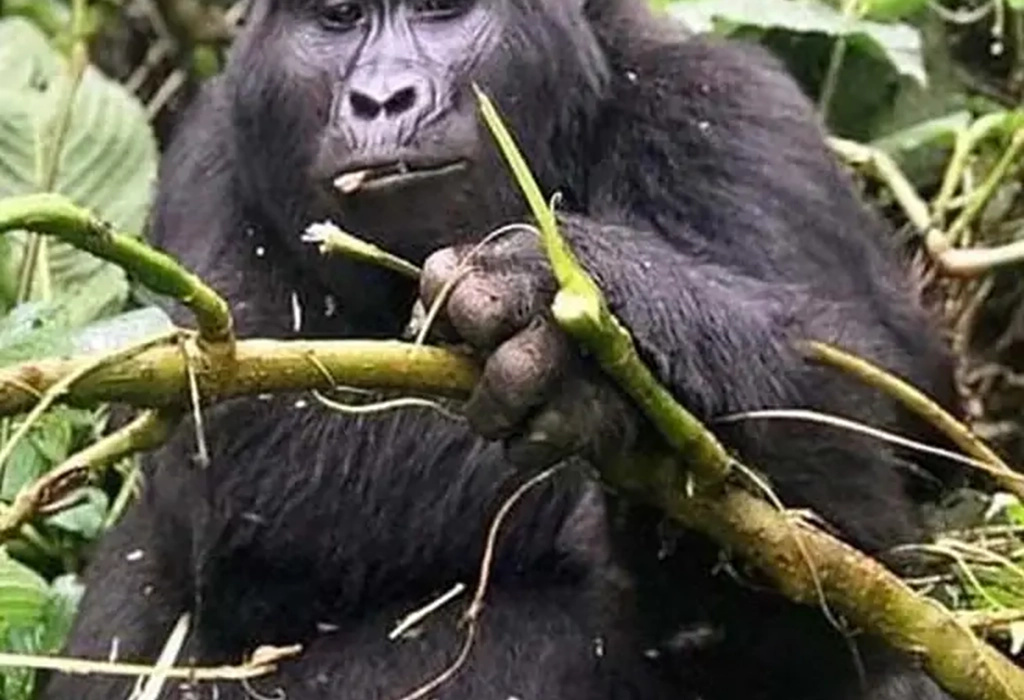
Mountain gorilla trekking is often the most anticipated activity of a Uganda Safari for Older First-Time Visitors. Observing these remarkable primates in their natural forest habitat can be an extraordinary experience, but travelers should understand that gorilla trekking is a genuine outdoor activity rather than a simple roadside wildlife encounter. Treks take place in protected mountain forests where the terrain may include steep slopes, uneven paths, dense vegetation and slippery surfaces. The walking distance cannot be guaranteed because gorillas move freely through their habitat, and the location of a particular family may change from day to day.
Age alone does not determine whether someone can enjoy gorilla trekking. Many older travelers remain active and regularly participate in hiking or other outdoor activities, while some younger visitors may find forest terrain challenging. Individual fitness, balance, mobility, health and comfort with walking on natural trails are more relevant considerations. Travelers who have concerns about strenuous activities should seek appropriate professional advice and discuss their practical requirements with their safari planner before permits and accommodation are confirmed.
Can porters make gorilla trekking easier?
Hiring a porter can make the experience more manageable by reducing the weight visitors need to carry. Porters may assist with suitable personal belongings and provide practical support on difficult sections of the trail, subject to park arrangements. Their services can be particularly helpful when the ground becomes muddy or steep. However, visitors should not assume that porter assistance removes every physical challenge, because the activity still takes place in a natural forest environment where weather and terrain conditions can change.
Why the trekking sector matters
Bwindi Impenetrable National Park has several trekking sectors, including Buhoma, Ruhija, Rushaga and Nkuringo. The confirmed permit sector affects the appropriate accommodation location and the morning transfer to the trekking meeting point. A lodge that appears close to Bwindi on a map may still be a considerable distance from the assigned sector. For this reason, accommodation should be coordinated with permit availability rather than selected independently without considering the trekking location.
What if one traveler prefers not to trek?
Couples and families do not necessarily need to participate in identical activities. One traveler may be enthusiastic about gorilla trekking while another prefers a quieter day at the lodge. Depending on the destination and available arrangements, an alternative activity or relaxation day may be possible. These arrangements should be discussed before departure so that any additional transport or guiding requirements can be considered.
For official information about gorilla trekking and conservation regulations, visit the Uganda Wildlife Authority. Travelers can also explore the broader safari planning options available through Abunda Discoveries Uganda.
5. Enjoy Classic Wildlife Game Drives
Game drives are among the most accessible ways to experience Uganda’s larger wildlife. Rather than walking through the bush, visitors travel in a safari vehicle with a knowledgeable driver-guide who helps interpret animal behavior, habitats and the surrounding landscape. Depending on the national park, travelers may search for elephants, buffaloes, giraffes, antelopes, lions, warthogs and numerous bird species. Wildlife sightings are never guaranteed because animals move freely, but experienced guides can help visitors understand the ecosystems and recognize signs of animal activity.
For older first-time travelers, the appeal of game drives lies partly in the balance between comfort and adventure. Visitors can experience open savannah landscapes without undertaking strenuous walking activities. However, it is important to remember that safari roads may be uneven and that game drives can involve several hours in a vehicle. The comfort of the journey therefore depends on vehicle suitability, seating arrangements, road conditions and the overall duration of the activity.
Queen Elizabeth National Park and Murchison Falls National Park are particularly valuable destinations for travelers seeking classic wildlife experiences. Each park offers different landscapes and opportunities for observation. Rather than rushing through both, a good itinerary allows enough time to appreciate their distinct characteristics.
6. Include Scenic Boat Safaris
Boat safaris offer a different perspective on Uganda’s wildlife and can provide a welcome contrast to vehicle-based activities. Instead of following animals across open savannah, visitors observe riverbanks, wetlands and aquatic habitats from the water. These experiences can be particularly rewarding for first-time travelers because they introduce species and behaviors that may be difficult to appreciate during a conventional game drive. Hippos, crocodiles, waterbirds and other animals associated with rivers and lakes may be encountered, although sightings depend on natural conditions.
Kazinga Channel in Queen Elizabeth National Park
The Kazinga Channel connects Lake Edward and Lake George and is one of the important wildlife-viewing locations within Queen Elizabeth National Park. A boat cruise offers opportunities to observe aquatic wildlife and birds along the channel. For mature travelers, the activity can complement morning game drives by introducing a different environment without requiring a long forest walk. Visitors should nevertheless confirm boarding arrangements and vessel suitability, particularly if steps or uneven surfaces present difficulties.
Victoria Nile in Murchison Falls National Park
At Murchison Falls National Park, a Nile boat excursion introduces visitors to one of Uganda’s most dramatic river landscapes. The experience can be combined with game drives and other park activities, providing variety within a relatively concentrated itinerary. Travelers should discuss the specific cruise route, duration and boarding arrangements with their safari operator before booking.
7. Choose Safari Lodges for Comfort and Accessibility
Accommodation selection can have a significant influence on the quality of a first Uganda safari. While photographs and room categories are useful starting points, they do not reveal every practical detail that may matter to older travelers. Some lodges are located on hillsides, with pathways connecting rooms to reception and dining areas. Others may have steps, uneven walking surfaces or relatively long distances between facilities. These features are not necessarily problems, but they should be understood before a booking is confirmed.
Location is equally important. A beautiful lodge may be less suitable if it requires an unnecessarily long journey to the next morning’s activity. This is particularly relevant for gorilla trekking, where the confirmed permit sector determines the appropriate meeting location. In savannah parks, staying in a strategically located property can also influence the amount of time spent traveling before wildlife activities begin.
Travelers should discuss room preferences, bathroom facilities, access to dining areas and any practical mobility considerations before finalizing accommodation. A private safari planner can use this information when requesting suitable rooms, although specific arrangements remain subject to lodge confirmation.
8. Understand Uganda Safari Road Travel
Road travel is part of many Uganda safari itineraries, and understanding it before departure helps visitors develop realistic expectations. Major wildlife destinations are located across different regions, so some travel days may involve several hours of driving. Road conditions vary, and certain routes include unpaved sections that can become more difficult during periods of heavy rain. Travelers should therefore evaluate an itinerary based on the overall journey rather than simply counting the number of attractions included.
A private vehicle can provide useful flexibility, particularly when guests prefer planned comfort stops or a slower travel rhythm. However, some journeys remain long even with a private driver-guide. Where appropriate, domestic flight options may be considered to reduce particular road transfers, although their availability, schedules, luggage allowances and total costs must be checked carefully.
For first-time visitors, a good travel day should include realistic expectations about arrival times and enough flexibility for changing conditions. It is usually better to reach a lodge comfortably and enjoy the evening than to arrive exhausted after an overambitious schedule.
9. Pack Practical Clothing and Equipment
Preparing for a first African safari does not require purchasing an entirely new wardrobe. Comfortable, practical clothing is generally more useful than specialized outfits chosen mainly for appearance. Uganda includes different climatic environments, from warm savannah regions to cooler highland forests, so packing should reflect the actual destinations and activities on the itinerary. Lightweight clothing can be useful during warmer days, while a rain jacket and additional layers may be important in higher-altitude areas.
Footwear deserves particular attention. Comfortable shoes are appropriate for many lodge stays and general travel activities, but gorilla trekking requires more dependable grip and support. Travelers who plan to walk through forest terrain should bring suitable hiking footwear and test it before departure. A small daypack, sun protection, insect repellent, binoculars and personal travel essentials can also contribute to a more comfortable experience.
- Comfortable lightweight shirts and trousers
- Long-sleeved clothing for selected activities
- Supportive walking shoes
- Hiking footwear for forest trekking
- Lightweight waterproof jacket
- Sun hat and sunscreen
- Insect repellent
- Binoculars and camera
- Spare batteries and charging accessories
- Travel documents and insurance information
- Personal medication and necessary prescriptions
- Small daypack and refillable water bottle
The most useful packing list is one tailored to the actual itinerary. Someone enjoying game drives and boat cruises will have different equipment needs from a traveler undertaking gorilla trekking or longer nature walks.
10. Discuss Personal Requirements Before Booking
Clear communication before departure is one of the most valuable parts of planning a safari for older first-time visitors. Travelers should feel comfortable explaining practical requirements that may influence the itinerary, accommodation or activity selection. These might include difficulty climbing stairs, a preference for shorter walking distances, dietary requirements, a need for frequent comfort stops or a desire to avoid consecutive long driving days. Sharing these preferences early allows a safari planner to identify suitable arrangements before bookings become difficult to change.
Medical preparation should be handled with qualified healthcare professionals. Travelers should seek appropriate advice about vaccinations, malaria prevention, personal medications, existing health concerns and fitness for strenuous activities. It is also important to review current entry requirements and travel insurance conditions before departure. Safari operators can assist with practical itinerary information, but they should not replace professional medical guidance.
Travelers who have specific mobility requirements should ask detailed questions about vehicle access, lodge facilities and individual activities. Accessibility varies considerably between properties and natural environments, so arrangements should be confirmed rather than assumed.
11. Arrive with Realistic Expectations
A safari takes place in natural ecosystems rather than controlled wildlife enclosures. Animals move according to their own behavior, weather conditions change and the timing of sightings cannot be guaranteed. A lion may be visible beside a track on one morning and difficult to locate the following day. A herd of elephants may be feeding near a water source during one visit and moving through a different part of the park during another. Understanding this unpredictability helps first-time visitors appreciate the experience without expecting every wildlife encounter to follow a fixed schedule.
Safari travel also involves adapting to unfamiliar environments. Early mornings, changing temperatures, unpaved roads and occasional changes in activity timing are normal parts of many wildlife journeys. Good planning reduces unnecessary inconvenience, but it cannot remove every uncertainty. Travelers who approach the experience with curiosity and flexibility often discover that unexpected moments become some of their strongest memories.
The most rewarding first Uganda safari combines careful preparation with an appreciation for the natural world. Rather than measuring success only by the number of animals photographed, visitors can enjoy the landscape, birdlife, local communities and the knowledge shared by their guides.
Best Uganda Destinations for Older First-Time Visitors
| Destination | Main experience | Planning consideration |
|---|---|---|
| Murchison Falls National Park | Game drives, Nile scenery and boat excursions | Allow enough time for travel and park activities. |
| Queen Elizabeth National Park | Savannah wildlife and Kazinga Channel | Combines vehicle and water-based experiences. |
| Bwindi Impenetrable National Park | Mountain gorilla trekking | Requires physical preparation and a confirmed permit. |
| Lake Bunyonyi | Scenery and relaxation | Can provide a quieter interval after active travel. |
| Kibale National Park | Chimpanzee trekking and forest experiences | Walking conditions and activity requirements should be considered. |
| Lake Mburo National Park | Wildlife viewing and landscapes | Can fit selected southwestern safari routes. |
The best destination combination depends on available time, preferred activities and the amount of travel a visitor finds comfortable. Not every first safari needs to include all six destinations. A smaller number of well-chosen locations can provide a richer and more relaxing experience than an itinerary that attempts to cover the entire country.
Sample 10-Day Uganda Safari for Older First-Time Visitors
This example itinerary combines several of Uganda’s major wildlife experiences while following a logical route through the country. It is a starting point rather than a fixed package. Travelers who prefer a slower pace may benefit from adding extra nights, reducing the number of destinations or considering selected domestic flights. The actual schedule must be adapted to confirmed accommodation, park activities and international flight times.
Day 1: Arrival at Entebbe International Airport
Your first day begins with arrival at Entebbe International Airport, where a representative can meet you and arrange a transfer to the selected accommodation. Rather than scheduling an immediate long-distance journey, the afternoon or evening can be reserved for rest after the international flight. This gives travelers an opportunity to adjust to the local environment, review the upcoming itinerary and prepare for the following day’s safari. For older first-time visitors, a relaxed arrival is often a better beginning than attempting to include additional sightseeing before recovering from the journey.
Day 2: Transfer to Murchison Falls National Park
After breakfast, begin the journey toward Murchison Falls National Park. Depending on the confirmed route and timing, the itinerary may include a visit to Ziwa Rhino Sanctuary, where guided rhino tracking is available under the sanctuary’s operating arrangements. Travelers should be aware that this activity involves walking and should discuss its suitability in advance. Those who prefer a less active day can consider an alternative travel schedule. Continue toward the Murchison Falls region, with suitable stops along the journey, and settle into your lodge for dinner and overnight rest.
Day 3: Wildlife Game Drive and Nile Boat Cruise
Begin the morning with a guided game drive in Murchison Falls National Park. The open landscapes provide opportunities to search for elephants, giraffes, buffaloes, antelopes and other wildlife, depending on natural movements and conditions. Your driver-guide can explain the park’s ecosystems and help identify different species along the route. In the afternoon, enjoy a scheduled boat excursion on the Nile, offering a different perspective on the park’s river environment. This combination introduces visitors to two contrasting wildlife experiences without requiring a demanding forest trek.
Day 4: Scenic Transfer to the Kibale Region
Today’s journey continues toward western Uganda and the Kibale region. Because this transfer can be lengthy, the day should be planned primarily around travel rather than additional demanding activities. The route passes through changing landscapes and rural communities, providing opportunities to observe everyday life beyond the national parks. Suitable comfort stops can be arranged along the way. After arrival, settle into your accommodation and enjoy a quiet evening in preparation for the next day’s optional primate experience.
Day 5: Chimpanzee Trekking or a Gentler Alternative
Travelers who are comfortable with forest walking may choose a chimpanzee trekking experience in Kibale National Park, subject to permit availability and the park’s rules. The activity takes place in a natural forest environment, and walking conditions can vary depending on the location of the chimpanzees and the weather. Visitors who prefer a less physically demanding day should discuss alternative arrangements before the trip. A relaxed lodge day or another suitable activity may be possible depending on the selected accommodation and local availability.
Day 6: Transfer to Queen Elizabeth National Park
After breakfast, continue toward Queen Elizabeth National Park, one of Uganda’s most varied wildlife destinations. The journey introduces visitors to changing landscapes, including western Uganda’s scenic countryside and areas associated with the Albertine Rift. Depending on arrival time and the final itinerary, there may be an opportunity for a gentle wildlife activity or time to enjoy the lodge surroundings. The emphasis should remain on reaching the destination comfortably rather than attempting to fit too many activities into a transfer day.
Day 7: Game Drive and Kazinga Channel Boat Cruise
Spend the morning exploring Queen Elizabeth National Park on a guided game drive. The park supports a variety of savannah wildlife, and your guide will help search for animals while explaining the characteristics of the surrounding habitat. In the afternoon, take a boat cruise on the Kazinga Channel, where visitors may observe hippos, waterbirds and other wildlife associated with the shoreline. The combination of a vehicle-based morning activity and a water-based afternoon excursion offers a varied day without requiring extended walking.
Day 8: Transfer to the Bwindi Gorilla Region
Continue south toward the Bwindi Impenetrable National Park region. The precise route depends on the confirmed gorilla trekking sector and the location of the selected lodge. The journey introduces travelers to Uganda’s southwestern highlands, where the landscape becomes increasingly mountainous and forested. After arriving at the accommodation, take time to rest and prepare for the following day’s activity. Your guide can review the trekking arrangements, recommended clothing and practical details so that you understand what to expect before entering the forest.
Day 9: Gorilla Trekking in Bwindi
For travelers who have chosen gorilla trekking and obtained the required permit, the day begins with an early transfer to the designated meeting point. After a briefing from the park authorities, participants enter the forest with the assigned ranger team. The walking distance and difficulty cannot be predicted precisely because the gorillas move freely. Once the animals are located, visitors can observe them according to the park’s strict conservation rules. After returning from the trek, the remainder of the day should be kept relatively relaxed, allowing time to recover and appreciate the experience.
Day 10: Return Journey or Safari Extension
The final day requires particularly careful planning because the southwestern gorilla region is a considerable distance from Entebbe. A same-day road transfer to Entebbe can be very long and may not be suitable for travelers with early or afternoon international flights. Depending on flight schedules, budget and availability, a domestic flight or an additional overnight stop may provide a more comfortable conclusion. Travelers should confirm the exact departure arrangements before accepting the final itinerary. For a more relaxed safari, extending the journey by one or two nights is often worth considering.
Would You Prefer a Slower 12- or 14-Day Safari?
A longer journey can provide additional nights in important destinations, more time for wildlife observation and fewer rushed transfers. Abunda Discoveries Uganda can prepare an itinerary around your interests and preferred travel pace rather than requiring you to follow a fixed schedule.
How to Book Your First Uganda Safari
Booking a first Uganda safari should begin with a conversation about your expectations rather than an immediate decision based only on price. The most useful information to share includes your preferred travel dates, number of travelers, approximate budget, desired accommodation category and the activities that matter most to you. If mountain gorillas are a priority, this should be mentioned early because permit availability can influence the entire itinerary. Travelers should also explain whether they prefer a shorter journey with fewer destinations or a more comprehensive safari that includes several national parks.
Practical preferences are equally important. If you would like rooms close to dining facilities, fewer stairs, a particular vehicle arrangement or a more relaxed daily schedule, these details should be communicated before accommodation and activities are booked. The purpose of a private safari is to create a journey that suits the people traveling, rather than expecting every visitor to enjoy the same pace and activities.
Abunda Discoveries Uganda can use this information to prepare an individualized travel proposal, subject to availability and confirmation of the required services. The written quotation should clearly explain the itinerary, accommodation, included activities, excluded expenses and applicable booking conditions.
20 Frequently Asked Questions About Uganda Safaris for Older Visitors
1. Is Uganda suitable for older first-time safari travelers?
Yes. Uganda offers game drives, boat safaris, scenery, birdwatching, cultural experiences and optional primate trekking. A private itinerary can be designed around different interests and activity levels, although specific accommodation and accessibility arrangements should always be checked before booking.
2. Is Uganda a good destination for a first African safari?
Uganda can be an excellent first safari destination for travelers who want to combine classic wildlife with mountain gorillas, forests, waterways and varied landscapes. The best experience depends on selecting a realistic itinerary that matches available time and personal preferences.
3. How many days should older visitors spend in Uganda?
Approximately ten to fourteen days can provide a useful balance for travelers interested in several major destinations. Shorter trips are possible when concentrating on one region, while longer journeys allow more time for relaxation and additional activities.
4. Is gorilla trekking compulsory?
No. Uganda offers many experiences beyond gorilla trekking, including game drives, boat cruises, birdwatching, cultural activities and scenic landscapes. Travelers can enjoy a rewarding safari without participating in demanding forest activities.
5. Am I too old for gorilla trekking?
Age alone does not determine trekking suitability. Individual fitness, mobility, health and comfort with natural forest terrain are more important considerations. Travelers should discuss concerns with qualified professionals and their safari planner.
6. Are Uganda safaris physically demanding?
The level of physical activity varies considerably. Game drives and many boat activities involve less walking than gorilla or chimpanzee trekking. A private itinerary can be organized around activities that suit the traveler.
7. Can I book a private safari instead of joining a group?
Yes. Private safaris allow greater control over the route, accommodation and overall daily schedule, subject to national park activity times and confirmed reservations.
8. Can older couples choose different activities?
Yes. Couples can share the same safari while selecting different activities on certain days. Alternative arrangements depend on the destination, available services and transport requirements.
9. What kind of vehicle is used on a Uganda safari?
Vehicle arrangements depend on the package. Travelers should request written confirmation of the vehicle type, seating configuration and any features important to their comfort before booking.
10. Are Uganda safari lodges comfortable?
Uganda offers accommodation across different categories, from simpler lodges to luxury properties. Comfort, facilities and accessibility vary, so individual properties and room arrangements should be reviewed before confirmation.
11. Can I avoid long driving days?
Some long transfers may be unavoidable on multi-park road safaris. However, a carefully planned itinerary can reduce unnecessary travel, include additional overnight stops or consider selected domestic flights where appropriate.
12. What is the best time of year to visit Uganda?
Many travelers prefer comparatively drier periods for road travel and wildlife activities. However, Uganda can be visited throughout the year, and the best month depends on destinations, activities and individual preferences.
13. Can I enjoy boat cruises without trekking?
Yes. Boat excursions are available in selected destinations and can be combined with game drives and lodge stays. Boarding arrangements should be checked if mobility is a concern.
14. Is Lake Bunyonyi suitable for relaxation?
Lake Bunyonyi can be a scenic destination for travelers who want a quieter interval between more active safari experiences. The suitability of individual lodges and activities depends on their location and facilities.
15. Can I travel to Uganda alone?
Yes. Solo travelers can arrange private safari itineraries, although the per-person cost may be higher because transport and guiding expenses are not shared with other guests.
16. Do I need special safari clothing?
Comfortable practical clothing is usually sufficient for many activities. Forest trekking requires more specialized footwear and weather protection than ordinary game drives or lodge stays.
17. Should I discuss mobility requirements before booking?
Yes. Sharing relevant requirements early helps the safari planner check accommodation access, vehicle arrangements and activity suitability before reservations are finalized.
18. Can a Uganda safari include wildlife and gorillas?
Yes. Many itineraries combine savannah wildlife in parks such as Queen Elizabeth or Murchison Falls with gorilla trekking in Bwindi or Mgahinga. The most suitable route depends on travel time and permit availability.
19. Are wildlife sightings guaranteed?
No. Wild animals move freely, and sightings depend on natural behavior, weather, habitat and other conditions. Experienced guides can improve the quality of the search but cannot guarantee particular encounters.
20. How do I request a customized Uganda safari?
Contact Abunda Discoveries Uganda with your travel dates, number of travelers, preferred duration, budget and main interests. A private itinerary can then be prepared for your consideration, subject to availability.
Helpful Resources for Your Uganda Safari
For information about Uganda’s protected areas and wildlife regulations, consult the Uganda Wildlife Authority. The UNESCO World Heritage Centre also provides information about the conservation importance of Bwindi Impenetrable National Park.
Continue exploring the Uganda Safaris for Seniors guide, visit the Abunda Discoveries Uganda website, or use the Safari Planning page to request an itinerary.
Plan Your First Uganda Safari with Abunda Discoveries Uganda
A rewarding Uganda Safari for Older First-Time Visitors begins with thoughtful planning, realistic expectations and an itinerary that respects individual preferences. Whether you dream of observing mountain gorillas, watching elephants on the savannah, enjoying a Nile boat cruise or discovering Uganda’s scenic highlands, Abunda Discoveries Uganda can help you explore suitable private safari arrangements.
Share your preferred travel dates, number of travelers, approximate budget and main wildlife interests. If you have particular preferences regarding walking distances, accommodation access or daily travel pace, include these details in your enquiry so they can be considered before reservations are made.