- CONTACT US NOW:
- +256 784 928 080
- info@abundadiscoveriesuganda.com

Things to Do on a Tanzania Safari in 2027: 10 Unforgettable Adventures
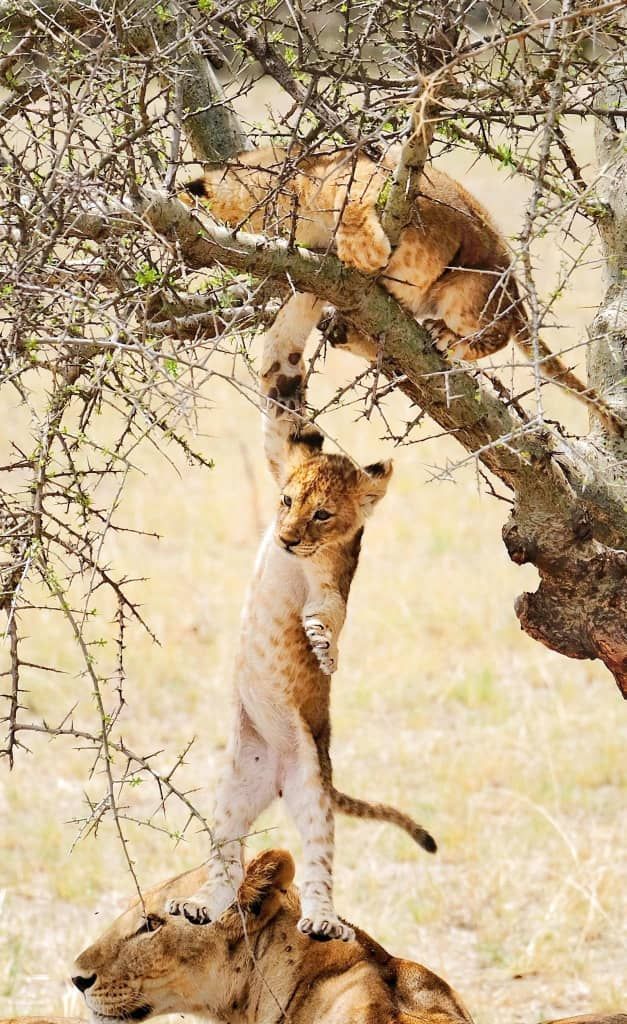
Hidden Wildlife Gems of East Africa
January 30, 2025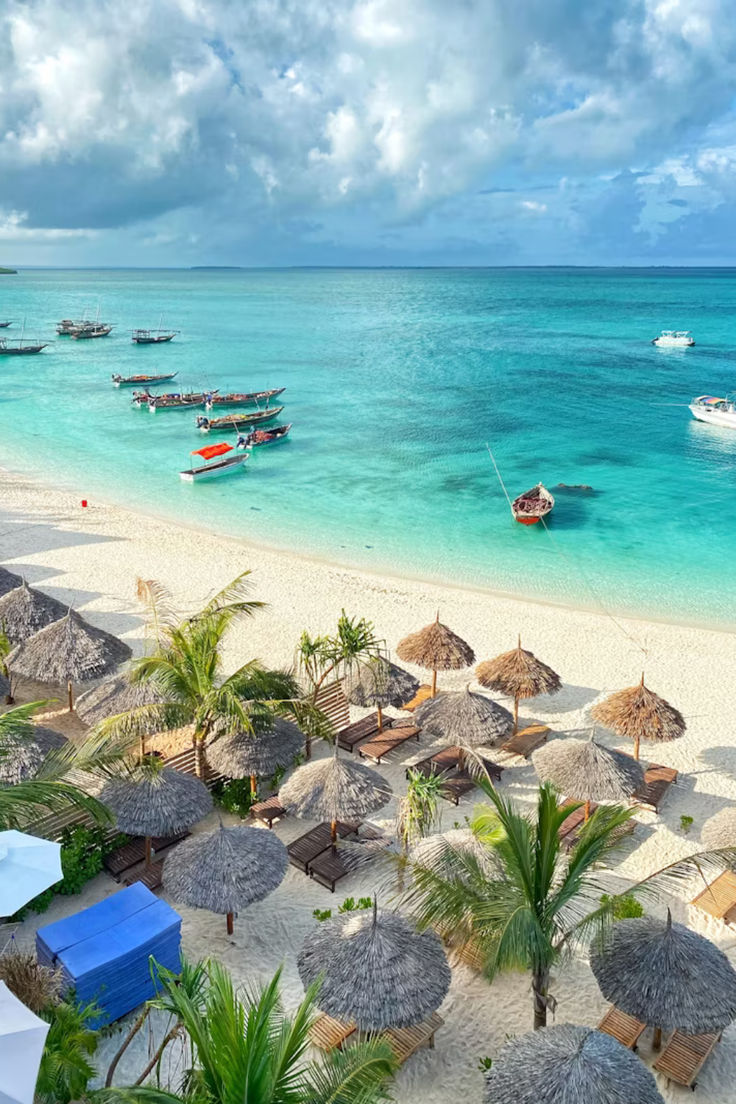
The Best Zanzibar Beaches
January 31, 2025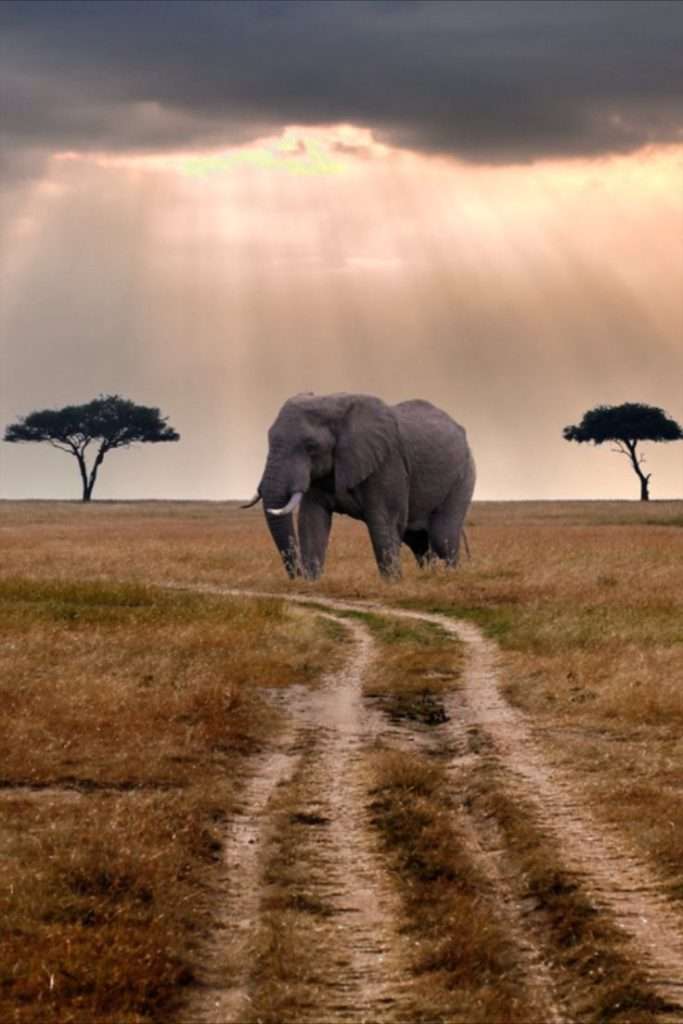
Things to Do on a Tanzania Safari in 2027: 10 Unforgettable Adventures
Table of Contents
- What Makes a Tanzania Safari So Special?
- Witness the Great Migration in the Serengeti
- Enjoy an Incredible Serengeti Game Drive
- Explore the Ngorongoro Crater
- Experience a Hot Air Balloon Safari
- Discover Tarangire National Park
- Visit Lake Manyara National Park
- Track Chimpanzees in Mahale Mountains and Gombe
- Experience Maasai Culture in Tanzania
- Explore the Remote Wilderness of Ruaha National Park
- Combine Your Tanzania Safari With Zanzibar
- Enjoy a Walking Safari in Tanzania
- Go Birdwatching on a Tanzania Safari
- See the Big Five in Tanzania
- Visit Olduvai Gorge and Discover Human History
- Experience Tanzania’s Scenic Landscapes
- Best Time for a Tanzania Safari
- How Many Days Do You Need for a Tanzania Safari?
- How Much Does a Tanzania Safari Cost?
- What to Pack for a Tanzania Safari
- Tanzania Safari for Couples and Honeymooners
- Tanzania Safari for Families
- Tanzania Safari for Photographers
- How to Choose the Best Tanzania Safari
- Tanzania Safari Travel Tips
- Common Tanzania Safari Mistakes to Avoid
- Frequently Asked Questions
- Plan Your Tanzania Safari With Abunda Discoveries Uganda
- Final Thoughts
Introduction: Why a Tanzania Safari Belongs on Your Travel List
A Tanzania safari is one of the most rewarding ways to experience East Africa. From the endless grasslands of the Serengeti to the wildlife-rich Ngorongoro Crater, Tanzania brings together extraordinary wildlife, dramatic scenery and fascinating cultural experiences in one destination. The country is also home to some of Africa’s most famous safari landscapes, making it an exceptional choice for first-time and experienced safari travelers alike.
What makes a Tanzania safari especially exciting is the variety of experiences available. You can spend one morning watching lions on the Serengeti plains, explore a volcanic crater later in your journey, meet Maasai communities, trek through forests searching for chimpanzees and finish your adventure relaxing on the beaches of Zanzibar.
Tanzania’s official tourism authority highlights wildlife safaris, the Great Migration, mountain adventures, culture and Zanzibar among the country’s major experiences. This diversity means that a safari does not have to be limited to traditional game drives. You can design your trip around wildlife, adventure, photography, culture, relaxation or a combination of all four.
This comprehensive guide explores the best things to do on a Tanzania safari, including the Great Migration, Serengeti game drives, Ngorongoro Crater, balloon safaris, chimpanzee trekking, cultural experiences, walking safaris and a Zanzibar beach extension. Whether you are planning your first African safari or returning to Tanzania for another adventure, these experiences can help you build a memorable itinerary.
1. What Makes a Tanzania Safari So Special?
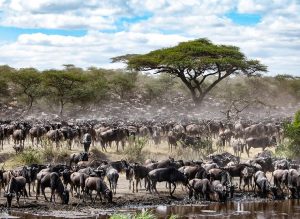
Great Migration wildebeest herd in Serengeti Tanzania
A Tanzania safari combines some of the most spectacular wildlife environments in Africa with an impressive range of landscapes and cultures. Northern Tanzania alone offers the Serengeti, Ngorongoro, Tarangire and Lake Manyara, while southern and western Tanzania provide opportunities for travelers seeking more remote experiences.
The country’s wildlife is one of its greatest attractions. Depending on the destination and season, travelers can encounter lions, elephants, buffaloes, leopards, cheetahs, giraffes, zebras, wildebeest, hippos and numerous antelope species. The Serengeti is particularly famous for its annual wildebeest migration. Tanzania’s tourism authority describes the Serengeti as a destination known for its massive annual migration of wildebeest and zebra.
However, wildlife is only part of the story. Tanzania also offers volcanic landscapes, highland scenery, lakes, forests, ancient archaeological sites and Indian Ocean beaches. This makes it possible to create a safari itinerary that changes dramatically from one day to the next.
For travelers who want a destination with wildlife, adventure, culture and relaxation, Tanzania is exceptionally versatile.
2. Witness the Great Migration in the Serengeti
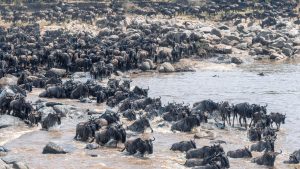
One of the most spectacular things to do on a Tanzania safari is experience the Great Migration in Serengeti National Park.
Every year, huge numbers of wildebeest, zebras and other herbivores move through the Serengeti ecosystem in search of fresh grazing and water. The migration is not a single event that happens on one specific date. Instead, it is a continuous natural cycle influenced by rainfall, food availability and animal movements.
The Serengeti is officially recognized for its large annual migration of wildebeest and zebra. Tanzania’s national parks authority also describes the migration as involving more than 1.5 million wildebeest, accompanied by large numbers of zebras and gazelles.
When Is the Best Time to See the Great Migration?
The best location depends on the month.
From approximately January to March, the southern Serengeti and Ndutu area can become particularly important for the calving season. Later in the year, herds move through the western and northern parts of the ecosystem.
During the dry-season months, wildlife activity can become especially rewarding because animals concentrate around remaining water sources and predators take advantage of the abundance of prey.
The important point is that the Great Migration is constantly moving. A good safari operator should therefore plan around seasonal patterns rather than promising that a specific herd will definitely be in one location.
3. Enjoy an Incredible Serengeti Game Drive
A classic game drive remains one of the best ways to experience a Tanzania safari.
The Serengeti’s enormous plains provide opportunities to search for predators and herbivores while learning about animal behavior and the wider ecosystem from an experienced guide. Early morning drives can be particularly rewarding because wildlife is often active before the heat of the day becomes intense.
A good guide adds enormous value to the experience. Instead of simply identifying animals, an experienced guide can explain tracks, predator behavior, bird calls, vegetation, seasonal movements and the relationships between different species.
The Serengeti is also a protected World Heritage Site and forms part of a wider ecosystem that supports large-scale wildlife movements. UNESCO lists Serengeti National Park among Tanzania’s World Heritage properties.
For photographers and wildlife enthusiasts, multiple game drives provide more opportunities to observe behavior rather than rushing from one animal sighting to another.
4. Explore the Ngorongoro Crater
A visit to the Ngorongoro Crater is another unforgettable experience to include in a Tanzania safari.
The crater is part of the Ngorongoro Conservation Area, a remarkable landscape containing highland plains, savannah, woodland and forest. UNESCO recognizes the area as a World Heritage Site and describes the Ngorongoro Crater as the world’s largest caldera.
The crater is particularly famous for its concentration of wildlife. Travelers may encounter lions, elephants, buffaloes, zebras, wildebeest, hippos and, with luck, black rhinos.
What makes the experience special is the landscape itself. Descending into the crater creates the feeling of entering a natural wildlife amphitheater surrounded by steep walls.
The conservation area is also culturally important because wildlife coexists with Maasai pastoral communities. This combination of natural and cultural heritage makes Ngorongoro more than simply another game-drive destination.
5. Experience a Hot Air Balloon Safari
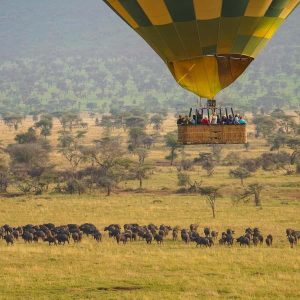
For travelers looking for a more luxurious and unusual Tanzania safari experience, a hot air balloon flight over the Serengeti can be unforgettable.
The adventure usually begins before sunrise. As the balloon rises above the plains, the landscape gradually becomes illuminated by the morning sun.
From above, the Serengeti looks completely different. Instead of viewing the landscape from ground level, you can see rivers, grasslands, woodland patches and wildlife from a unique perspective.
After landing, many balloon safari experiences include a bush breakfast, creating an elegant combination of adventure and luxury.
A balloon safari is particularly appealing to honeymooners, photographers and travelers celebrating a special occasion.
6. Discover Tarangire National Park
Tarangire National Park deserves serious consideration when planning a northern Tanzania safari.
The park is known for its distinctive scenery, large elephant populations and impressive baobab trees. During drier periods, wildlife can become concentrated around water sources, creating excellent opportunities for game viewing.
Tarangire also offers a different visual experience from the open plains of the Serengeti.
The combination of giant baobabs, woodland, grassland and wildlife gives the park a distinctive character.
For travelers with limited time, Tarangire can be particularly useful because it can fit naturally into northern Tanzania safari circuits alongside Lake Manyara and Ngorongoro.
7. Visit Lake Manyara National Park
Lake Manyara National Park offers another interesting stop on a northern Tanzania itinerary.
The park contains a mixture of woodland, groundwater forests, open areas and lake environments, creating habitats for a variety of wildlife and bird species.
Lake Manyara is often associated with tree-climbing lions, although sightings are never guaranteed because wildlife behavior is unpredictable.
Birdwatchers may also find the area rewarding because the lake and surrounding habitats attract numerous bird species.
A visit to Lake Manyara can therefore complement a broader itinerary that includes Tarangire, Ngorongoro and Serengeti.
8. Track Chimpanzees in Mahale Mountains and Gombe
Tanzania is not only about savannah wildlife.
Travelers interested in primates can venture west to destinations such as Mahale Mountains National Park and Gombe National Park, where chimpanzee experiences offer a completely different type of adventure.
Instead of searching for wildlife from a safari vehicle, visitors enter forest environments and follow guides and trackers.
Gombe is particularly famous because of the long-running chimpanzee research associated with Jane Goodall.
Mahale combines forested mountain landscapes with the shores of Lake Tanganyika, creating an extraordinary setting for primate adventures.
Because these destinations are relatively remote, they are particularly suitable for travelers with more time and an appetite for unusual safari experiences.
9. Experience Maasai Culture in Tanzania
A Tanzania safari can become much more meaningful when wildlife experiences are combined with respectful cultural encounters.
The Maasai are one of Tanzania’s best-known pastoral communities, and travelers may encounter Maasai communities around areas such as the Ngorongoro region.
A responsible cultural visit can provide opportunities to learn about traditional livelihoods, livestock keeping, crafts, music, dance and community life.
However, cultural tourism should be approached respectfully. A community visit should not reduce people to a tourist attraction.
Travelers should choose experiences that provide genuine community participation and economic benefits while respecting local customs and photography preferences.
The coexistence of wildlife and semi-nomadic Maasai pastoralism is also part of the cultural significance recognized by UNESCO in the Ngorongoro Conservation Area.
10. Explore the Remote Wilderness of Ruaha National Park
If you want to move away from Tanzania’s busiest safari routes, consider Ruaha National Park.
Ruaha offers expansive landscapes, baobab-studded scenery and excellent opportunities for wildlife viewing.
The park can be especially attractive to experienced safari travelers who have already visited the northern circuit and want a quieter, more remote atmosphere.
Wildlife can include elephants, lions, leopards, wild dogs, giraffes and numerous antelope species.
A southern Tanzania safari can therefore offer a different sense of wilderness from the more heavily visited northern parks.
11. Combine Your Tanzania Safari With Zanzibar
One of the most popular ways to finish a Tanzania safari is with a beach holiday in Zanzibar.
After several days of early-morning game drives and wildlife adventures, Zanzibar offers an opportunity to slow down.
Travelers can explore Stone Town, relax on the beaches, snorkel, dive, take boat excursions or learn about the island’s spice-growing heritage.
Tanzania’s official tourism website promotes Zanzibar alongside wildlife and adventure experiences, making a safari-and-beach combination a natural way to extend a Tanzania holiday.
For honeymooners, this combination can be particularly attractive because it brings together wildlife adventure and tropical relaxation in one trip.
12. Enjoy a Walking Safari in Tanzania
A walking safari changes the way you experience the African bush.
When traveling on foot, you become more aware of details that can easily be missed from a vehicle.
Your guide may explain animal tracks, plants, insects, bird calls, dung, footprints and other signs of wildlife activity.
The experience is less about finding the largest animal and more about understanding the ecosystem.
Walking safaris are subject to park regulations and local safety procedures, so travelers should always use authorized guides and follow their instructions.
13. Go Birdwatching on a Tanzania Safari
Tanzania is an excellent destination for travelers who enjoy birdwatching.
The country’s diverse ecosystems support a wide variety of resident and migratory birds.
Savannahs, wetlands, forests, lakes and coastal environments all provide different habitats.
A safari guide with strong birding knowledge can transform ordinary game drives into fascinating birdwatching excursions.
For serious birdwatchers, Tanzania can therefore be planned as a dedicated birding destination rather than simply adding birds as a secondary activity.
14. See the Big Five in Tanzania
The Big Five—lion, leopard, elephant, buffalo and rhinoceros—remain among the most sought-after animals on an African safari.
Tanzania provides excellent opportunities to search for these iconic species, although no responsible safari operator can guarantee every sighting.
The best strategy is to allow sufficient time and visit productive wildlife areas with experienced guides.
Ngorongoro can be particularly rewarding because of its high wildlife density, while the Serengeti offers extensive predator-prey interactions.
Remember that a successful safari should not be measured only by ticking animals off a list.
Behavioral sightings can be just as memorable as rare species.
15. Visit Olduvai Gorge and Discover Human History
The Ngorongoro Conservation Area is not only important for wildlife.
It also has extraordinary archaeological significance.
Olduvai Gorge has contributed important evidence to the study of human evolution and human-environment relationships. UNESCO notes that archaeological research in the wider conservation area extends across millions of years.
A visit can therefore add an educational dimension to your safari.
Instead of experiencing Tanzania purely through wildlife viewing, you can also learn about the deep history of humans and the environments in which our ancestors lived.
For travelers interested in archaeology, anthropology and history, this can be one of the most fascinating additions to a northern Tanzania itinerary.
16. Experience Tanzania’s Scenic Landscapes
The landscapes encountered during a Tanzania safari are often just as memorable as the wildlife.
The Serengeti provides seemingly endless grasslands.
Ngorongoro offers dramatic volcanic scenery.
Tarangire is famous for its giant baobabs.
The western parks combine mountains, forests and Lake Tanganyika.
Zanzibar provides tropical coastal landscapes.
This diversity makes Tanzania particularly attractive to landscape photographers and travelers who enjoy scenic road journeys.
17. Best Time for a Tanzania Safari
The best time for a Tanzania safari depends on what you want to see.
Travelers focused on general wildlife viewing often favor the drier months because vegetation can be less dense and animals may gather around reliable water sources.
Travelers interested in the Great Migration need to consider the seasonal movement of the herds and select regions according to the period of travel.
Birdwatchers may appreciate greener periods when landscapes are lush and migratory birds are present.
There is therefore no single month that is universally “best” for every safari.
The right travel period should be selected according to your priorities, budget and itinerary.
18. How Many Days Do You Need for a Tanzania Safari?
The ideal duration depends on how much of Tanzania you want to experience.
A short three- or four-day safari can focus on destinations such as Tarangire, Ngorongoro and part of the northern circuit.
A longer seven-day itinerary provides more time for the Serengeti and reduces the pressure of constant travel.
Travelers wanting the Great Migration, chimpanzees, southern Tanzania or Zanzibar should consider a longer trip.
The most important principle is to avoid trying to cover too much ground in too little time.
A well-paced safari usually produces a better experience than an itinerary that spends most of its time driving between destinations.
19. How Much Does a Tanzania Safari Cost?
The cost of a Tanzania safari varies considerably depending on the season, accommodation category, transportation, park fees, number of travelers and length of the trip.
Budget safaris can use simpler accommodation and shared transportation, while luxury itineraries may include premium lodges, private vehicles, internal flights and exclusive experiences.
The Great Migration period can also influence accommodation demand and pricing.
When comparing safari quotations, do not look only at the headline price.
Check what is actually included, such as accommodation, meals, park fees, transportation, guiding, airport transfers and additional activities.
A transparent quotation makes it easier to compare different Tanzania safari packages fairly.
20. What to Pack for a Tanzania Safari
Packing correctly can make your safari considerably more comfortable.
Lightweight clothing is useful during warm days, while a fleece or jacket can be valuable during cool mornings and evenings.
Comfortable closed shoes are recommended for safari activities, particularly if walking is included in your itinerary.
You should also consider sun protection, insect repellent, a reusable water bottle, personal medication, a camera and additional batteries or charging equipment.
If you are combining a safari with Zanzibar, remember to include suitable beachwear and lighter clothing for the coast.
21. Tanzania Safari for Couples and Honeymooners
A Tanzania safari is an exceptional honeymoon experience because it combines adventure, wildlife and romance.
Couples can enjoy private game drives, luxury lodges, bush dinners, sunset experiences and hot air balloon flights before continuing to Zanzibar for several days on the beach.
The key is to avoid creating an exhausting itinerary.
A honeymoon safari should allow enough time to relax between activities.
Private accommodation and carefully selected lodges can also create a more intimate experience.
22. Tanzania Safari for Families
Families can also enjoy Tanzania, provided the itinerary is designed around their needs.
Younger travelers may particularly enjoy elephants, giraffes, zebras, lions and other easily recognizable wildlife.
Long driving days should be minimized where possible.
Family-friendly accommodation and appropriate activities should be selected according to the children’s ages and the operator’s current rules.
A good family safari balances wildlife viewing with rest, shorter activities and educational experiences.
23. Tanzania Safari for Photographers
Tanzania is a dream destination for wildlife photographers.
The Serengeti provides opportunities for predator photography, migration scenes and expansive landscapes.
Ngorongoro offers dramatic scenery combined with concentrated wildlife.
Tarangire provides distinctive baobab landscapes and elephant photography.
Photographers should carry sufficient memory cards, spare batteries and appropriate camera protection.
Most importantly, patience matters.
Some of the strongest wildlife photographs come from waiting for natural behavior rather than rushing between sightings.
24. How to Choose the Best Tanzania Safari
Choosing the right safari starts with identifying your main objective.
Are you interested in the Great Migration?
Do you want to see the Big Five?
Are you looking for luxury?
Would you prefer remote wilderness?
Do you want to finish on Zanzibar?
Your answers should determine your route.
A reputable safari operator should also explain realistic travel times, accommodation categories, seasonal conditions and what is included in the price.
Avoid operators who promise guaranteed wildlife sightings or claim that every itinerary works equally well throughout the year.
25. Tanzania Safari Travel Tips
A successful safari depends on preparation as much as excitement.
Confirm your travel documents, accommodation, transportation and park arrangements before departure.
Keep copies of important documents and ensure that your travel insurance provides appropriate coverage.
Follow your guide’s instructions whenever you are around wildlife.
Animals are wild and unpredictable, so visitors should never leave vehicles in unauthorized areas or attempt to approach wildlife independently.
Responsible behavior protects both travelers and wildlife.
26. Common Tanzania Safari Mistakes to Avoid
One common mistake is trying to visit too many parks during a short holiday.
Another is choosing a safari entirely on price without checking what is included.
Travelers can also make the mistake of selecting their dates without considering seasonal wildlife movements.
Ignoring travel time is another problem. Tanzania is a large country, and distances between destinations can be substantial.
Finally, do not assume that every wildlife experience is guaranteed. A safari is an encounter with nature, and unpredictability is part of its magic.
27. Frequently Asked Questions About Tanzania Safari
What is the best Tanzania safari?
The best Tanzania safari depends on your interests. A Serengeti and Ngorongoro itinerary is excellent for first-time visitors, while travelers seeking remote experiences may prefer southern or western Tanzania.
How many days do I need for a Tanzania safari?
Three to four days can provide a short northern-circuit experience, while seven or more days allow for a more relaxed and comprehensive itinerary.
What is the best month for a Tanzania safari?
There is no single best month for every traveler. The ideal period depends on whether you prioritize general wildlife viewing, the Great Migration, birdwatching or a specific region.
Can I see the Big Five in Tanzania?
Yes. Tanzania offers excellent opportunities to search for lion, leopard, elephant, buffalo and rhinoceros, although wildlife sightings can never be guaranteed.
Is Tanzania good for a honeymoon safari?
Yes. Tanzania combines excellent wildlife viewing with luxury lodges, private experiences and easy opportunities to extend a safari with a Zanzibar beach holiday.
Can I combine Tanzania safari and Zanzibar?
Yes. A safari followed by Zanzibar is one of the most popular ways to combine wildlife adventure with a tropical beach holiday.
Is Tanzania good for families?
Yes, provided the safari is planned around the ages and needs of the children, with suitable accommodation, transportation and activity schedules.
Is the Great Migration guaranteed?
No. The migration follows seasonal patterns but is influenced by rainfall, food availability and animal movements. Experienced operators plan around these patterns but cannot guarantee an exact sighting.
28. Plan Your Tanzania Safari With Abunda Discoveries Uganda
Planning a successful Tanzania safari requires more than choosing a national park from a map.
Your travel dates, wildlife interests, budget, accommodation preferences and available time all influence the best itinerary.
At Abunda Discoveries Uganda, we can help travelers build East African journeys that combine wildlife, culture, adventure and relaxation.
Whether you want to experience the Serengeti, explore Ngorongoro, search for chimpanzees, enjoy a luxury safari or finish your journey on Zanzibar, your itinerary can be designed around your priorities.
You can also combine Tanzania with a wider East African adventure, depending on your travel plans.
For travelers interested in Uganda, Kenya, Rwanda and Tanzania, a carefully designed multi-country itinerary can provide a much broader experience of the region.
Explore Africa beyond the ordinary with Abunda Discoveries Uganda and start planning your Tanzania safari adventure.
29. Final Thoughts: Make Your Tanzania Safari Unforgettable
A Tanzania safari is much more than a collection of game drives.
It can be a journey through some of Africa’s most remarkable landscapes, from the vast Serengeti plains to the dramatic Ngorongoro Crater and the remote wilderness of southern and western Tanzania.
You can witness the Great Migration, search for the Big Five, explore forests for chimpanzees, learn about Maasai culture, experience a hot air balloon flight and finish your adventure beside the Indian Ocean.
Tanzania’s official tourism authority presents the country as a destination combining wildlife, adventure, culture, landscapes and coastal experiences.
The best safari, however, is not necessarily the longest or most expensive.
It is the safari that matches your interests, travel style, available time and budget.
With careful planning and a knowledgeable local operator, Tanzania can deliver an extraordinary African adventure that stays with you long after you return home.